Showing posts with label National Monuments. Show all posts

Wednesday, July 11, 2012

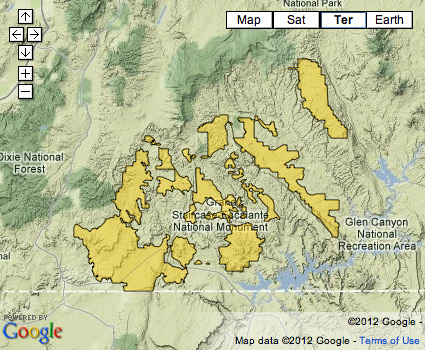
Western Watersheds Project Acts: Grand Staircase Escalante National Monumen

Western Watersheds Project Acts:  Grand Staircase Escalante National Monument
~ Jonathan Ratner , Wyoming Director

ratner
Last week, Western Watersheds Project filed suit against the Bureau of Land Management for failing to act to protect the precious resources of the Grand Staircase - Escalante National Monument (GSENM) from the damages of livestock grazing.

The monument was established by President Clinton in 1996 on 1.9 million acres of BLM land containing stunning geologic formations and unique ecosystems.  The proclamation required that the new Monument be managed beyond the usual 'multiple use' approach taken by the BLM.
 
Grand Staircase Escalante National Monument

Its mandate:

First and foremost, the Monument will remain protected in its primitive, frontier state. The BLM will safeguard the remote and undeveloped character of the Monument, which is essential to the protection of the scientific and historic resources. Second, the Monument will provide opportunities for the study of scientific and historic resources.

However, 16 years after the Monument was established, the BLM has not even gotten around to put in place a management framework to deal with livestock grazing in light of the purposes for which the Monument was established. Instead of managing the GSENM better than the rest of BLM lands, befitting a National Monument, the BLM failed to even comply with its own national grazing regulations.

Case in point: In 2006, the BLM conducted Rangeland Health Assessments across the Monument and found 21 allotments or more than half the Monument failing Rangeland Health Standards due to livestock. Rather than address these failings, BLM buried the assessments. When word leaked out, BLM was forced to provide all 21 determinations to the public. However, the BLM is also required under its own regulations to take actions to correct Rangeland Health failures before the start of the next grazing season, but in this case, 6 years have ticked by and the BLM has not worked to correct the problems and reverse the degradation that is occurring.

On July 6th, with the representation of Meyer Glitzenstein & Crystal, WWP filed litigation in Washington D.C. to force the agency to implement the actions that the BLM itself determined were necessary to stop grazing damage to this national treasure. The land shouldn't have to wait any longer.

Many thanks to Meyer Glitzenstein & Crystal, Dr. John Carter, Dr. Jim Caitlin of Wild Utah Project, and WWP's Laura Welp for helping to bring these problems to light!


Thursday, August 18, 2011

The monumental fight over Otero Mesa

The decade-long tussle over energy development in New Mexico's Otero Mesa has been reinvigorated recently, as hardrock mining claims now threaten the region for the first time.

The area, sometimes referred to as the "Southwest's Serengeti," is a 1.2 million-acre stretch of undisturbed Chihuahuan Desert grassland. The sprawling but sensitive expanses of black grama are home to over 1,000 species of native wildlife including a genetically-pure herd of pronghorn antelope, the endangered northern aplomado falcon, mountain lions, mule deer, bald and golden eagles and hundreds of species of plants, insects and migratory birds.

Otero Mesa is administered by the Bureau of Land Management (BLM) which is mandated to facilitate exploration, development and production of energy on appropriate public lands. During the second Bush's administration there was a push to advance oil and gas extraction on the Otero Mesa.

But whether or not the area's fragile ecology can withstand such activity became central to the ongoing row. Drilling opponents—which then included the State of New Mexico—fought industry all the way to the U.S. 10th Circuit Court of Appeals which, in 2009, found that the BLM's Resource Management Plan Amendment fell short in assessing the potential impacts of oil and gas development, including possible habitat fragmentation and contamination of the Salt Basin Aquifer which underlies the mesa.

The BLM is now working on a new management plan, which is expected to be released early next year.
 New to the debate is the discovery that Otero Mesa may harbor a cache of valuable minerals. A 2010 U.S. Geological Survey study revealed that the Cornudas Range, including 7,280-foot Wind Mountain, may hold 200 tons of minerals, including highly sought-after rare earth metals. Seeing dollar signs, Colorado-based Geovic Mining Corp. staked 161 mineral claims (five square miles worth) this spring, nearby some of the most visited parts of Otero.

The General Mining Act of 1872 allows companies to develop staked claims but the BLM is required to do environmental reviews of all proposed actions. Conservationists say exploration and mining of the area could lead to destruction on the scale of the mountaintop removal seen in Appalachia. The company says digging for rare earths would mean only minor disturbances.

Regardless, the claims have led to a renewed push to declare Otero Mesa a national monument. While President Obama has yet to invoke his authority to establish monuments under the Antiquities Act of 1906, a BLM memo leaked last year put Otero on a hot list of locations that qualify for nomination.

Although Obama has said that only places with local support for a monument in their backyard will make the cut, the designation is at the president's discretion; it requires no Congressional consideration or approval. Fifteen out of the past eighteen presidents have designated national monuments, some amid a firestorm of criticism.

An elevation to national monument would permanently protect the Otero Mesa from new mining and drilling claims. Existing claims, including Geovic Mining Corp.'s, would remain valid but would be scrutinized for their economic fruitfulness.

Adding their voices to those of environmentalists and outdoor enthusiasts in the drive for monument status are members of the Mescalero Apache, a tribe that took refuge in the mountains of southern New Mexico in the 18th century and still assert ancestral ties to the mesa. In a letter to their tribal president, the group Mescalero Apache Advocates expressed their spiritual connection to Wind Mountain and to the archaeological artifacts that are among the area's attractions. "And on those massive stones that fell from the mountain top, our people expressed through rock paintings their challenges, their visions, and their stories, like their ancient ancestors who dwelled there before them," they said.

Last month, the Mescaleros met with Department of the Interior and New Mexican officials, expressing concern for the natural resources which they believe drilling and mining endanger, including the huge untapped aquifer underlying Otero, which may be the largest remaining in the state. They worry that the fractured geology that characterizes the area makes that reserve vulnerable to contamination.

Despite the desire of many local and national groups to award the mesa a higher level of protection, a monument designation will not come easily. Western lawmakers are particularly touchy about the subject, arguing that states and Congress should have more say in what happens to public land. This type of dissention goes as far back as western members of Congress opposing Theodore Roosevelt's establishment of large new reserves on federal lands.

Last May, the Otero County Commission passed an ordinance opposing national monument protection for Otero Mesa, likely at the behest of local ranchers who fear the status change will threaten their cheap grazing on public lands. While Susana Martinez, the state's new governor, hasn't voiced her stance, her coziness with oil and gas industries makes her an unlikely ally for conservation.

Rep. Steve Pearce (R-N.M.) has been an outspoken critic, and has actively campaigned not only to prevent protection of Otero Mesa but to change the way national monuments are designated nationwide. He is a co-sponsor of H.R. 302, legislation that would require the president—in direct opposition to the Antiquities Act—to secure state consent before declaring a national monument. "When conserving our natural resources, it is important to have a balanced approach that includes local priorities, such as jobs, the economy, private property and support," a Pearce spokesman told the Environment & Energy Daily.

The tired argument that conservation will mean economic paralysis wherever the magic wand of protection lands is a disingenuous one in the case of Otero Mesa. If elected officials in New Mexico are truly interested in acting in the best interests, now and in the future, of their constituents, they need to run the numbers.

An analysis of the potential impacts, on the southern New Mexican economy, of naming Otero Mesa National Monument was done recently by Headwaters Economics, an independent, non-profit research group.

"The short answer is that repeated academic studies have shown that investments in public lands conservation and restoration provide an immediate return through new employment and revenue," says author Ben Alexander. The study cites the Economic Research Service of the U.S. Department of Agriculture, which recently found that "recreation and tourism development contributes to rural well-being, increasing local employment, wage levels, and income, reducing poverty, and improving education and health.”

Unlike the small-scale, short-term benefits of resource extraction that would be expected for Otero Mesa residents, protected public lands also help to promote long-term economic growth, says the Headwaters study, "because of their ability to attract and retain people, entrepreneurs, and the growing number of retirees who locate for quality of life reasons." Published research also shows that natural amenities help sustain property values and attract new investment.

While a national monument designation "would not harm agricultural uses or military employment" in the area, says the study, passing up an opportunity to diversify the economy of southern New Mexico and to boost its long-term resiliency by protecting its unique desert grasslands could be a bad move. "Looking at mineral wealth, the [BLM's] analysis showed little reason to believe that the local economy would benefit from projected fossil fuel extraction on Otero Mesa--and that the limited revenue from mineral extraction might not even cover the share of infrastructure and service costs," says Alexander.

It's difficult to hear amid the anti-environmental mewling that's overtaken Congress nowadays, but here it is loud and clear: conservation pays. If they are honestly focused on "local priorities, such as jobs, the economy, private property and support," as Rep. Pearce's camp purports to be, they would have to support national monument status for Otero Mesa. Anything less is playing politics with our public lands.

Essays in the Range blog are not written by High Country News. The authors are solely responsible for the content.

Heather Hansen is an environmental journalist working with the Red Lodge Clearinghouse /Natural Resources Law Center at CU Boulder, to help raise awareness of natural resource issues.

Monday, August 23, 2010

Lewistown meeting shows monument opposition mounting

Mistrust of the purported plans by the Interior Department to create a grasslands national monument — possibly with bison — on Montana's open plains was expressed by speaker after speaker at a meeting here Friday.

"Fool me once, shame on you. Fool me twice, shame on me," Montana Congressman Denny Rehberg, a Republican, said. "I don't trust 'em."

Interior Department and Bureau of Land Management officials insist that no concrete plans are in place to create new national monuments in the West.

Yeah, right — that was the message Montanans sent at the two-hour panel discussion, which Rehberg convened at the Lewistown Civic Center.

Rehberg said he wants public input on possible plans by the government to preserve lands across the West by creating national monuments, including a 2.5-million-acre grasslands refuge in northeastern Montana. The possibility was discussed in an internal Bureau of Land Management planning paper that has since been made public.

The meeting drew just more than 200 people, who filled the bleachers in the gymnasium. They heard speeches from a panel of county commissioners and people with ranching interests, who said they oppose a monument designation and urged the crowd to get informed — and ready for battle.

"I just hope you stay with us because it's going to be a fight that's worth fighting for," said Mike Ereaux, a rancher and the president of Phillips County Stockgrowers.

Residents, he added, had the right to say no to a monument.

"Not just no, but hell no," he said.

A 21-page "treasured landscape" memorandum drafted by top BLM officials that has turned up in the hands of the Congressional Western Caucus has residents worried about having a monument that they don't want be approved by presidential proclamation without local input.

It's happened before, they said.

President Bill Clinton used the federal Antiquities Act at the 11th hour of his administration to create the Missouri River Breaks National Monument in 2001 by presidential proclamation, a fact that was referred to several times Friday. That monument designation had its supporters, but none were speaking up Friday if they were present.

Use of the Antiquities Act, which allows the president to declare a monument without congressional input, was roundly criticized Friday by residents such as Big Sandy rancher Dana Darlington, who said it needs to be reformed so presidents can't act unilaterally.

Darlington, calling the initiative a "treasured land grab," urged residents to get involved to curb the "sweeping" plan.

"When injustice becomes law, resistance becomes duty," said Darlington, quoting Thomas Jefferson.

An area stretching form the Bitter Creek Wilderness Study Area to the Canadian border is mentioned as a possible national monument in the planning document, which states that the northern Montana prairie contains some of the largest unplowed areas of grasslands in the world, as well as some of the best wildlife habitats on the Great Plains. The cross-boundary conservation unit would provide an opportunity to restore prairie wildlife and to establish a new bison range, the document states.

Seven of the eight people on Rehberg's panel spoke against the idea, but Sean Gerrity, president of the American Prairie Foundation, withheld judgment. APF runs a growing private grassland preserve in northeastern Montana, where genetically pure bison roam.

Gerrity said an actual proposal to designate the area as a monument has not been made public, which makes it too soon to form an opinion.

"It seems to me we owe them a fair hearing once a proposal shows up," said Gerrity, noting APF is grateful for the subsidies it receives from the federal government in the form of inexpensive fees to use public land for grazing.

Gerrity said he first heard about the "treasured landscapes" last spring and spent time in Washington, D.C., with other landowners at a meeting in which BLM Director Bob Abbey and Interior Secretary Ken Salazar discussed the idea.

He was peppered with questions by residents about the prairie reserve, including its ties with the World Wildlife Fund, a conservation organization that supports the Montana reserve. WWF has been criticized for its alleged conversations with Interior Department officials about the proposed monuments.

Martha Kauffman, Bozeman-based managing director of the Northern Great Plains Program for WWF, said the group isn't in collusion with government land managers, as some people have suggested.

When the organization heard about the treasured landscape proposal in the spring, it inquired about what it was, then offered suggestions on land in Montana it considers really important, she said.

"I think it's good for people to say what they're concerned about," she said following the meeting. "I would like to encourage people to talk with me and others rather than surmise."

Kauffman told the crowd that Western Montana has received most of the conservation focus in Montana, while the eastern part of the state is overlooked.

"We like it that way," somebody in the crowd shouted.

Interior Secretary Ken Salazar downplayed the internal memo when he appeared before the Senate Appropriations subcommittee earlier this year.

"There are no plans that we have to move forward," Salazar said, describing the memo as the result of an informal dialogue among agency employees.

But members of the panel said the details outlined in the document demonstrate that far more than just brainstorming is under way.

Phillips County Commissioner Lesley Robinson said she is worried about the loss of ranching families from the area should the government begin to purchase private land interspersed with BLM land for a monument. The county also depends heavily on natural gas development, which a monument could curtail, she said.

"The impact to Phillips County would be very large," she said.

The county invited BLM Director Abbey to Montana, and Abbey accepted. He is scheduled to speak Sept. 16 at Malta High School, Robinson said.

Robinson, expressing concern that environmental groups had a hand in the planning of the treasured landscapes, said any proposal should be locally generated.

Blaine County Commissioner Art Kleinjan said a monument might be a good idea to protect an object such as Pompey's Pillar — the famous sandstone butte signed by explorer William Clark. However, a monument designation is a farce for the vast rolling hills and rivers of northeastern Montana, which ranchers and farmers have preserved for generations, Kleinjan said.

"We kept this country the way it is, and there's no reason you need a monument to keep it beautiful," he said.

Wednesday, August 11, 2010

Interior Releases More of Leaked List of Potential National Monuments

The Interior Department has released the rest of a partially leaked document listing potential sites for new national monuments, but the move did nothing to quell Republican accusations that the Obama administration is plotting to lock up public lands.

House Republicans in February received a leaked copy of pages 15 through 21 of a document that details 14 Western sites potentially eligible for national monuments designation under the Antiquities Act of 1906, a law that allows the president to create new monuments without congressional approval.

The Republicans have been demanding the rest of the document since, which included pushing a "disclosure resolution" through the House Natural Resources Committee in the spring. Rep. Rob Bishop (R-Utah) today announced Interior had handed over the first 14 pages of the document to his office in late July.

The newly released pages of the document detail the Bureau of Land Management's goals for expanding its National Landscape Conservation System. The agency considers up to 140 million acres of land -- more than half of the 264 million acres it manages -- as "treasured lands," the document says.

The document calls on the administration to first support legislative efforts for new conservation designations and turn to executive action "should the legislative process not prove fruitful."

"However, the BLM recognizes that public support and acceptance of preservation status is best achieved when the public has an opportunity to participate in a land-use planning or legislative process," the document says.

Such assurances did little to satisfy Bishop, who said the new details support his charges that the Obama administration is planning to block energy development across millions of acres of Western lands.

"Thousands of Westerners whose livelihoods depend upon access to our public lands stand to be affected by these decisions, and yet this document blatantly goes out of its way to exclude their input or participation," Bishop said. "If there was any question about whether or not this administration has declared a war on the West, these new documents are evidence enough."

But Interior officials say the document reflects an initial brainstorming session about which areas may merit more serious consideration.

"Secretary Salazar believes it is important that the Department of the Interior serve as wise steward of the places that matter most to Americans," said department spokeswoman Jordan Montoya. "For that reason, he has asked [Interior's] bureaus to think about what areas might be worth considering for further review for possible special management or congressional designation."

Wednesday, June 2, 2010

Obama admin. holds meetings on 'Great Outdoors'

On the edges of a vast landscape that measures in the millions of acres and stretches north through a wilderness area and a scenic national park, ranchers and environmentalists have been able to agree on a lot lately.

The work done to preserve land in northwestern Montana's "Crown of the Continent" was made the shining example Tuesday of what the Obama Administration hopes to achieve with its new "America's Great Outdoors Initiative."

The conservation effort has focused on voluntary land sales of 310,000 acres from a large timber company, deals to retire mining and oil projects and conservation agreements with ranchers and land owners in developing homemade plans for a working landscape in the heart of the Rocky Mountains.

The varied interests behind the effort also agree the Obama Administration should make sure its new initiative doesn't force land conservation ideas from big cities down the throats of rural residents.

"Urban-based conservation movements have really only succeeded in alienating the very best allies: our ranchers, our loggers, our sportsmen and our farmers," said Melanie Parker, who lives in the scenic Swan Valley and has played an integral role in getting loggers and environmentalists in the area to talk with one another.

The administration assured all involved that its initiative will rely on the local ideas gathered in a nationwide listening tour launched Tuesday and Wednesday in Montana.

"The first message, clearly, is that this effort must be bottom up," said Agriculture Secretary Tom Vilsack. "Far be it from me, from Iowa or Washington D.C. or wherever I come from, to suggest I know better."

Montana is a state, like many in the West, where federal land management and conservation are often hotly debated and can lead to long-lasting policy stalemates.

President Barack Obama expects that the multi-agency listening sessions around the country will result in a report delivered to him by November, Vilsack said. The next event will be in Los Angeles in the coming weeks, following sessions Wednesday in Missoula, Bozeman and Helena.

Watershed preservation efforts from the Great Lakes to Chesapeake Bay will also be covered, Vilsack said. The goal is to include everything from recreation to economic development, particularly for rural areas where incomes languish compared to most urban areas.

In Montana, the administration officials were joined by the state's governor and U.S. senators. They highlighted the decade-long conservation effort around The Bob Marshall Wilderness Area and Glacier National Park that has involved longtime foes in land use battles.

Enhancing wildlife habitat was a main goal, but so was improving the local economy with ways to make sure a working landscape became a sustainable timber source for planned biomass energy production.

State and federal money was secured, but only after it was clear the effort had widespread local support after years of hammering out complex deals.

The administration's new initiative comes as Republicans and others criticize the contents of an internal Interior Department memo and other records that show the administration was considering the potential for presidential monument declarations in nine western states. Those declarations, last done in Montana under former President Bill Clinton, remain a very sore point for some westerners.

Leading Democrats said the monument declarations are not part of the agenda.

"I am opposed to the administration creating monuments," said Sen. Max Baucus, D-Mont., who holds an influential role in the Senate. "This is bottom up, that was top down."

Saturday, March 20, 2010

Richardson supports monument status for Otero Mesa

Gov. Bill Richardson sent a letter Thursday to the Obama administration saying that any effort to consider national monument status for southern New Mexico's Otero Mesa has his support.

The governor's letter to Interior Secretary Ken Salazar referred to reports about an internal Interior Department document that lists 14 sites in nine states that could be designated as national monuments through the federal Antiquities Act, which gives presidents the authority to designate monuments without congressional approval.

Otero Mesa, which has become a battleground for environmentalists and the oil and gas industry, is on the list. The mesa is the largest publicly owned expanse of undisturbed Chihuahuan Desert grassland in the United States.

The department has said the list is just a product of brainstorming, but Richardson and environmentalists who have been seeking permanent protection for Otero Mesa say they are encouraged by the Obama administration's conservation initiatives thus far.

''The increased rigor and transparency of drilling reviews demonstrates a willingness to make needed improvements and learn from past actions in states like New Mexico,'' Richardson said in his letter.

The governor's letter also says Otero Mesa "encompasses approximately 1.2 million acres of Chihuahuan Desert, is a unique ecosystem that is home to rare desert grasslands, herds of pronghorn, prairie dog villages, mule deer, aplomado falcons and more than 345 of the world's 1,500 cacti species."

Nathan Newcomer, associate director of the New Mexico Wilderness Alliance, said the mesa's water, wildlife and cultural record deserve to be protected.

"We feel Otero Mesa is a wild and beautiful place," Newcomer said. "I think it would be huge for Otero County. Otero Mesa is the largest and wildest expanse of natural grasslands left in the country. I think it would be a tremendous boon for you guys (Otero County)."

Newcomer said with 200 species of birds inhabiting Otero Mesa, the birding community alone would bring people from around the world to the mesa.

One of the arguments heard against making places into national monuments is that the land is being locked up, Newcomer said. But the opposite is true, he claims.

"The land is already public land and this would guarantee that land would be protected forever," he said. "It would be elevating that area as a very important landscape. Nothing is being taken away from anybody. We want people to see it and we want people to understand grassland ecosystems."

Otero County is lucky to have Otero Mesa in its "backyard," Newcomer said.

In April 2009, the U.S. 10th Circuit Court of Appeals defeated a Bureau of Land Management plan for Otero Mesa that would have opened the area to oil and gas drilling. Since then, the governor and the conservation groups have urged the BLM and the Department of the Interior to permanently protect Otero Mesa, Newcomer said.

Otero County Commissioner Ronny Rardin briefly commented on the governor's request. His view is that making Otero Mesa into a national park could affect Otero County residents' land use rights.

"You have government, like the federal government, coming down on county land without considering our land use," Rardin said.

Rardin was attending an Otero County Commission meeting Thursday evening and was planning to introduce the issue to the other commissioners at that time. The meeting was not over as of press time.

The Governor's letter is here.

Wednesday, March 3, 2010

Complaints heat up over possible new monuments

On the same day a Utah legislative committee unanimously approved a resolution voicing opposition to the creation of any more national monuments, members of the U.S. Senate Western Caucus also took their fight to the mat.

Sen. Orrin Hatch, R-Utah, and other members of the Senate Western Caucus sent a letter Tuesday to Interior Secretary Ken Salazar, expressing concern about the possible designation of national monuments in Utah and other states absent public input or consent.

In the letter, Hatch and six other caucus members, including Sen. Bob Bennett, R-Utah, voiced opposition to the possible designation of 14 sites in nine Western states as national monuments through the "misuse" of the Antiquities Act. Two of the sites — the San Rafael Swell and Cedar Mesa — are in Utah.

"Americans enjoy a variety of benefits from our public lands, but many westerners rely on public lands for their very livelihoods. For that reason, Congress has ensured that public land management decisions are made in a process that is both public and transparent. … Americans should never live in fear that the stroke of a pen in Washington could forever change their lives," the senators wrote.

The vitriolic opposition is an echo of the reaction across the state when President Bill Clinton designated 1.7 million acres in southern Utah as the Grand Staircase-Escalante National Monument in 1996. Clinton used the Antiquities Act to make the surprise designation.

"The way the monument was designated violated the spirit and letter of the Antiquities Act, which expressly forbids large land grabs," Hatch said. "Citizens should oppose any abuse of power by the government, and using the Antiquities Act to circumvent public input and congressional oversight is a clear abuse."

The letter stresses the need for building local consensus and "stakeholder involvement," when it comes to land management and also points to overburdened federal agencies it asserts are ill-equipped to deal with the responsibilities that come with new monument designations.

"The Bureau of Land Management faces budget shortfalls annually, and the National Park Service faces a maintenance backlog on its existing facilities of over $9 billion," the letter reads. "Policymakers must focus on making responsible investments on behalf of the American taxpayer."

In addition to Hatch and Bennett, the letter was signed by Sens. John Barrasso, R-Wyo.; Michael Enzi, R-Wyo.; Jon Kyl, R-Ariz.; Mike Johanns, R- Neb.; and John Ensign, R-Nev.

HCR 17, a resolution on the issue being run by Rep. Mike Noel, R-Kanab, unanimously passed a legislative committee Tuesday afternoon that featured an appearance by former Congressman James Hansen.

The long-time Republican lawmaker, active for years in wilderness and lands-related legislation, told members of the House Natural Resources committee that while resolutions are skeptically referred to as "mere" message bills, federal lawmakers do take notice.

Former Salt Lake City Mayor Ted Wilson, who also served as the head of the Utah Rivers Council, said he supports the resolution despite being a self-professed environmentalist.

"(But) I also know the tremendous setback with the Grand Staircase. It angered county commissioners all over this state, it angered a lot of Democrats," he said.

Wilson, the newly tapped head of Gov. Gary Herbert's Balanced Resource Council, said any presidential designation of new national monuments in Utah would be a significant setback undermining resources plans being crafted.

e-mail: amyjoi@desnews.com

Monday, March 1, 2010

Senate turns back bid to block White House on national monuments

The first round of a new fight over White House power to unilaterally impose new protections on large tracts of western lands went to the Obama administration.

The Senate on Thursday rejected, 38-58, Sen. Jim DeMint’s (R-S.C.) bid to block White House authority to designate national monuments in western states.

DeMint wanted to attach the amendment to legislation approved yesterday aimed at bolstering tourism in the U.S.

The issue flared this month with the leak of an internal Interior Department document that lists 14 potential national monuments in nine states.

Interior Department officials called the document a very preliminary draft, and said that no decisions have been made about what areas – if any – might merit further review.

But the document has nonetheless enraged western Republicans, who fear a “land grab” that would prevent oil-and-gas drilling and many other activities.

Utah Republicans have introduced bills that would prevent designations in that state without Capitol Hill approval. And Sen. Lisa Murkowski (R-Alaska) plans to introduce a bill next week that do the same thing for her state, an aide said today.

On Friday, 16 House Republicans led by Reps. Rob Bishop (Utah) and Doc Hastings (Wash.) wrote to Interior Secretary Ken Salazar seeking a host of other documents related to Interior’s consideration of new monuments.

The letter says there are unanswered questions about the status of potential designations, what groups or people are involved in the review, and the extent to which consideration will continue “behind closed doors.”

“Western communities and residents that stand to be affected by these proposed monument designations have the right to know what the Administration is planning with regards to the future of millions of acres of both public and private lands throughout the West,” Bishop said in a prepared statement Friday.

“Despite the DOI’s statements that the initial documents are simply ‘drafts,’ the American people deserve to know the full extent of the planning as well as the involvement of all outside parties,” he added.

Bishop chairs the Congressional Western Caucus, and Hastings is the top Republican on the House Natural Resources Committee.

An Interior Department spokeswoman said last week that Interior Secretary Ken Salazar “believes new designations and conservation initiatives work best when they build on local efforts to better manage places that are important to nearby communities.”

Congress Should Limit President's Authority on Monuments -- U.S. Chamber

Congress should act to limit the president's authority to create new national monuments, the U.S. Chamber of Commerce said this week.

The Antiquities Act of 1906 currently gives the president authority to declare new national monuments without congressional approval in order to protect threatened cultural and natural resources. But past presidents have repeatedly abused that authority to make sweeping designations that are much larger than those originally intended by the act, the chamber said in a letter Monday to White House Chief of Staff Rahm Emanuel.

"The Act was designed to protect small areas of land and specific items of archaeological, scientific, or historic importance," the chamber wrote. "In fact, it instructs the President to confine any designations 'to the smallest area compatible with the proper care and management of the objects to be protected.'"

A confidential document (pdf) leaked last week revealed that the Interior Department had compiled a list of 14 potential sites for new or expanded national monuments the administration could create through the Antiquities Act.

The Antiquities Act already contains provisions limiting presidential authority in Wyoming and Alaska, and those requirements should be made national, the chamber said. Utah representatives, still upset over President Clinton's 1996 decision to create the 1.7-million-acre Grand Staircase Escalante National Monument, introduced legislation that would put similar restrictions in place in their state.

If Congress does not act and the Obama administration does go forward with the listed designations, it should first take public comment, the chamber said.

The leaked document, which Interior officials have downplayed as the result of a preliminary "brainstorming" session, says in its opening paragraph that any designations should follow an assessment of public and congressional support.

Congressional Republicans are calling the document evidence of "secret insider dealings," and Rep. Rob Bishop (R-Utah) today thanked the chamber for joining the fray.

"Western states have already suffered this past year from the administration's anti-energy, land-hungry policies, which have locked up sweeping swaths of land and put thousands out of work," Bishop said. "The fact that they would even consider making these designations without public input is disingenuous at best."

Copyright 2010 E&E Publishing. All Rights Reserved.

For more news on energy and the environment, visit www.greenwire.com.

Western Lawmakers Ask Salazar for All Doc's On Nat'l Monument Designations‏

National Parks, Forests and Public Lands Subcommittee Ranking Member Rob Bishop (UT-01); and 14 Members of Congress sent a letter today to Secretary of the Interior Ken Salazar requesting further information related to an internal DOI document that revealed the Administration is considering designating numerous new National Monuments that would lock up at least 13 million acres of land.

Secretary Salazar has publicly said that there is “no secret agenda” and wants to have a “public dialogue.” Therefore, the Department should be willing to answer questions regarding the exact undertakings and status of the potential Monument designations, as well as what outside group and individuals have been involved in the secret planning.

“If this internal document had not been exposed, Americans would still be in the dark about the Obama Administration’s potential plans to lock up millions of acres of land across the West,” said Hastings. “While Secretary Salazar says that the discussions are just ‘preliminary,’ no assurances have been given that the President will not designate these monuments. When you catch someone in the kitchen in the dark of night with their hand in the cookie jar, it’s very hard to believe they’re just checking to see what’s inside and that no cookies were just about to get eaten. The communities and those workers whose jobs could be directly affected by the locking up of these lands deserve to see a full picture of what was happening inside their government. We’ve asked for copies of documents relating to the planning, which includes coordination with outside groups, and all of the missing pages from the document we uncovered last week.”

“Western communities and residents that stand to be affected by these proposed monument designations have the right to know what the Administration is planning with regards to the future of millions of acres of both public and private lands throughout the West,” said Bishop. “Despite the DOI’s statements that the initial documents are simply ‘drafts,’ the American people deserve to know the full extent of the planning as well as the involvement of all outside parties. If the DOI is confident that it is operating with the utmost transparency then they should have no problem providing these documents expeditiously. However, given the number of congressional document requests made to DOI this past year that remain unfulfilled, I am not holding my breath.”

In the letter, the Members request the following additional information from Secretary Salazar:

1. All pages of the “Internal Draft” document of which we obtained only pages numbered 15 to 21.

2. With regard to the “brainstorming,” a copy of any documents distributed at or in preparation for the meetings, a list of all participants or invitees, any notes taken at the meeting (s), and any memoranda, work product or follow up documents from the meeting(s). All records, electronic or otherwise, of meetings or discussions with private groups, individuals or other persons or entities that are not employees of the Department of the Interior where potential National Monument designations were discussed. All notes, agendas, memoranda or documents from those meetings.

3. All documents related to the Secretary’s initiative to compile a list of potential National Monument designations since July 1, 2009, including, but not limited to, maps.

4. Any communication with any person or entity outside of the Department of the Interior related to the Secretary’s initiative since July 1, 2009.

Background

The letter was signed by the following Members:

Congressman Doc Hastings (WA-04)

Congressman Tom McClintock (CA-04)
Congressman Doug Lamborn (CO-05)
Congressman Don Young (AK)
Congressman Dean Heller (NV-02)
Congressman Greg Walden (OR-02)
Congressman Jeff Flake (AZ-06)
Congressman Denny Rehberg (MT)
Congressman Rob Bishop (UT-01)

Congresswoman Cynthia Lummis (WY)
Congressman Wally Herger (CA-02)
Congressman Jason Chaffetz (UT-03)
Congressman Pete Sessions (TX-32)
Congressman Scott Garrett (NJ-05)
Congressman John Campbell (CA-48)
Congressman Mike Simpson (ID-02)

Tuesday, February 23, 2010

Obama to Create New National Monuments?

A short list (below) describing the Obama Administration’s potential new national monuments was leaked to the media this week. I had heard rumors that this was being considered as early as November when I had a private conversation with a top BLM administrator, so I was not surprised by the “announcement.”

The areas under consideration for new national monument status subject to public support and other considerations include the following lands, Owyhee Canyons, Montana Plains, Otero Mesa, San Rafael Swell, Northern Sonoran Desert, Cascades Siskiyou, Vermillion Basin, Lesser Prairie Chicken, Berrysessa-Snow Mountain, Heart of the Great Basin, Bodie Hills, Modoc Plateau, Cedar Mesa, and San Juan Islands.

At one time or another I have visited nearly all the proposed national monuments and each has its special values that make them worthy of protection. Let’s hope the Obama administration follows through on designation of these areas, and even adds a few of the runner up proposals like Bristol Bay, Alaska and Wyoming’s Red Desert.

The Proposed National Monuments
:

Otero Mesa in New Mexico: A 1.2 million acre grasslands inhabited by prairie dogs, pronghorn, and other wildlife.

San Rafael Swell, Utah: A wild 40x75 mile mix of canyons, gorges, arches, and buttes that includes 5 wilderness study areas, this place has long been considered for national park status. I’ve wandered some of the canyons on the fringes of this area including Little Wildhorse Canyon, an area with narrow slot canyons.

Owyhee Canyonlands in Oregon and Nevada: The adjacent Idaho portions of this canyon complex was given some partial protection by legislation last year, but Nevada and Oregon sections of this area remain unprotected. I worked the BLM searching for rare plants in this extremely remote part of the West, and often went days without seeing another soul. The remote canyons are home to redband trout and California bighorn sheep.

Montana Northern Plains: This would protect the Bitter Creek WSA and other BLM lands which lies just south of the Canadian border and immediately adjacent to Grasslands National Park in Canada. Back in the 1980s, I published a proposal for Montana wildlands that included a 3.5 million acre national park that would have included the BLM lands along the Missouri Breaks, Charles M. Refuge Wildlife Refuge, and the Bitter Creek area, among other public holdings. In essence, this proposal would make that dream a reality by creating a natural connected corridor between the Charles M. Russell National Wildlife Refuge, Missouri Breaks National Monument, and private conservation efforts north of the Missouri River.

Northwest Sonoran Desert, Arizona. The Sonoran Desert, dominated by its signature plant, the saguaro cactus, it is the most diverse of all North American deserts. On-going and escalating ORV abuse, livestock grazing, and other threats, including extended drought perhaps due to global climate change, threatens this unique ecosystem. This proposal would encompass desert lands northwest of Phoenix.

Cascade Siskiyou National Monument expansion, California/Oregon. In 2000 the Cascades Siskiyou National Monument was established in Oregon, but a portion of the area lies in California. This expansion south would include fine examples of oak woodlands and the unique plant assemblages in this region which features vegetation representative of the Great Basin, Klamath Mountains and Cascade Range. There is also discussion of including an expanded boundary in Oregon as well to include the proposed Siskiyou Crest to the west of Ashland. The Siskiyou Crest includes portions of the PCT, the Red Buttes Wilderness, and the Kangeroo Roadless areas, one of the largest unprotected roadless areas in northern California. This is an area I’ve explored on numerous occasions over the years, and can attest to its unique beauty and quality.

Vermillion Basin, Colorado. The Vermillion Basin lies along the Colorado-Wyoming border and bisected by Vermillion Creek, a tributary of the Green River. Part of the area was studied by the BLM for wilderness designation. It is another lonely corner of the West with rugged canyons and sage covered slopes containing important sage grouse habitat. I’ve hiked a few parts of the basin, and did not encounter another person. But this solitude is likely to change in the future since the area is considered a high priority for on-going oil and gas exploration.

Lesser Prairie Chicken, New Mexico: A 58,000 acre area that is home to bluestem grasslands that contain some of the best lesser prairie chicken habitat in the United States.

Berrysessa-Snow Mountain, California: This 500,000 acre area would include portions of California’s northern Coast Ranges that are the headwaters of Cache Creek, a BLM wilderness area, home to many wintering bald eagles and a growing herd of Tule Elk as well as one of the most diverse botanical communities in the United States. I’ve had the pleasure of hiking Cache Creek and hiking to the summit of Snow Mountain—both areas have outstanding wildlands value, but I was most impressed with the oak woodlands on lower slopes and fir forests at higher elevations.

Heart of the Great Basin, Nevada: This monument would include the Toiyabe, Monitor, and Toquima Ranges. All three ranges have some protected status granted by wilderness designation. This was one of my favorite parts of Nevada which I explored in preparing my Nevada Mountain Ranges book. It contains substantial archeological sites, huge aspen groves, and 12,000 foot peaks.

Bodie Hills, California. Have you ever visited Bodie Ghostown State Park north of Mono Lake, than you have been in the proposed Bodie Hills National Monument. This land of sweeping sage covered hills, home to Mono Basin Sage Grouse, an endangered species. Connecting the Bodie Hills with Mono Lake Scenic Area, plus adjacent recently designated wilderness in the headwaters of the Owen River would make a large interconnected wildlands of national significance.

Modoc Plateau, California. The 3 million acre proposed Modoc Plateau National Monument is another one of those out of the way places in the West where few venture, and is not likely to be on anyone’s to “must see before I die list”. The proposal includes the Skedaddle Mountains on the Nevada-California border, one of the largest unprotected wilderness study areas in the state. Immediately west of the Black Rock Desert complex in northern Nevada, this area, along with the Owyhee Canyonlands, probably contains some of the least visited areas in the American West. One of the things that I’ve particularly enjoyed when I’ve camped out here, is the vast bowl of shining stars at night since this area is far from any major urban light sources.

Cedar Mesa, Utah. The Cedar Mesa area extends from the San Juan River to Elk Ridge on the north borders Grand Gulch on the west and Comb Wash on the east. It includes some of the best canyons in Utah like Mule, Arch, Fish and others, as well as thousands of ancient Native American dwellings and other archeological materials. I once watched cows trampling and destroying ancient walls of an Indian dwelling in Arch Canyon, and have seen plenty of damage from ORVs in Comb Wash. Hopefully national monument designation can bring more protection to this unique part of Utah’s Canyon Country.

San Juan Islands, Washington. The 172 islands and islets that make up Washington’s San Juan Islands lie in Puget Sound north and west of Seattle. The islands lie in the rainshadow the Olympic Mountains and receive some of the lowest annual precipitation on the entire West Coast north of Santa Barbara, California. I have only visited a few of the islands, but enjoy the play of land and sea. The islands and the surrounding ocean is a rich land for marine mammals like orca as well as salmon. There are only 13,389 acres are owned by federal, state or local governments in the islands, so I don’t know exactly which lands might be included in the monument. Hopefully national monument status can add to these public holdings to preserve what is a truly outstanding landscape.

Other areas on short list:

Among areas on the short list which probably will not get national monument designation at this time are Wyoming’s Red Desert, Bristol Bay region and Teshekpuk Lake on the North Slope, both in Alaska. It’s a shame that these three areas are not at the top of the list.

Wyoming’s Red Desert, has been proposed as national park for decades. It includes Adobe Town Badlands, a desert elk herd, and portions of historic trails like the Oregon and Mormon trails. It is threatened by expanding oil and gas development. (Perhaps the reason it is not on the list is due to legislation passed when the Tetons were given protected status that prohibited any new national monuments in Wyoming.)

The Bristol Bay is area that is under threat. The Bay is home to the most famous and largest salmon fisheries in North America, and a proposed gold mine near the headwaters of one of the area rivers could pose a threat to many of these runs.

Finally, Teshekpuk Lake is a well known breeding area for waterfowl located along the Arctic Coast to the west of Prudhoe Bay. Oil development is planned for this area as well.

Land Acquisition and Consolidation

Other parts of the leaked proposal discuss funding for land trades and targeted land acquisition from willing sellers in several important areas to consulate management. For instance, within the Missouri Breaks National Monument there are approximately 80,000 acres of private lands which the administration believes could be purchased for approximately $24 million. Another area targeted for land acquisition is the Upper Green River Valley of Wyoming where almost 400,000 checker boarded state and private acres are located that could be purchased or exchanged. A third area for consolidation is the John Day River in Oregon and the south slope of the Pioneer Mountains in Idaho near Craters of the Moon National Monument.

What are National Monuments?


National Monuments are similar to national parks in many ways, and raise the profile of an area. Unlike National Parks which must be designated by Congressional legislation, and are only managed by the National Park Service, national monuments can be created by Presidential proclamation under the 1906 Antiquities’ Act. Though most national monuments are under National Park Service administration, five other federal agencies currently manage some of our national monuments. For instance, the Missouri Breaks National Monument in Montana is managed by the BLM and Mount St. Helens Volcano National Monument is managed by the Forest Service.

The Act was first used by Theodore Roosevelt to create Devil’s Tower National Monument in Wyoming in 1906. Roosevelt subsequently expanded upon this first conservation act by designating the Grand Canyon NM, Olympic NM, National Bridges NM, and Pinnacles NM in California, among 18 national monuments he established during his presidency. Many subsequent Presidents have designated new national monuments, including George W. Bush who created five national monuments, though four were off in the middle of the Pacific Ocean where there are no voters and no controversy. Many national monuments are “upgraded” to national park status eventually. For instance, Grand Teton National Park, Death Valley National Park, Katmai National Park were all originally national monuments.

Locals Typically Oppose National Monuments

We will, no doubt, hear some the predictable rhetoric about a “government” take over—even though in nearly every instance, the designation is merely changing management emphasis on lands already owned by the public. Historically, however, national monuments were established over the protests of local people.

For example, Teddy Roosevelt tried in vain to get Congress to protect the Grand Canyon but with no success, So Roosevelt used the Antiquities Act to create a Grand Canyon National Monument over the objections of mining, logging and livestock interests as well as most of the residents of Arizona. The Arizona Congressional Delegation even stopped funding for the national monument as a protest.

Similarly, when Roosevelt established protection for old growth forests in the Olympic Mountains, local timber interests and communities were outraged. When Franklin Roosevelt established Jackson Hole National Monument in the Tetons in 1943, locals protested, and the Wyoming delegation introduced legislation to undesignated the monument.

Eventually the Jackson Hole National Monument was merged with other lands to create Grand Teton National Park. When Bill Clinton and Bruce Babbitt established Grand Staircase Escalante National Monument in southern Utah in 1996, the Utah Congressional delegation and Governor were opposed.

There is a pattern to all these protest. Generally short sighted local attitudes change over time, and national monuments generally enjoy wide spread public support even within the states where public opposition was high. There are few people who live in Wyoming today, for instance, who would vote to undesignated Grand Teton National Park. And on the heavily logged Olympic Peninsula, Olympic National Park retains the bulk of remaining old growth forests and intact salmon streams that is now one of the prime attractions of the region.

Will the Obama Administration go forward with this proposal and ensure a legacy in conservation history? I certainly hope so. If history and the passage of time is any indication, future generations of Americans will thank him for these designations just as millions of Americans now enjoy and are grateful for past President’s use of the Antiquities Act to enshrine many of America’s most iconic landscapes from the Grand Tetons in Wyoming to Glacier Bay in Alaska to Joshua Tree National Park.

George Wuerthner has published 35 books covering many areas and topics including Wildfire: A Century of Failed Forest Policy, California Wilderness Areas, Oregon Wilderness Areas, Nevada Mountain Ranges, Alaska Mountain Ranges, Idaho Mountain Ranges, and Thrillcraft--The Environmental Impacts of Motorized Recreation.

In the West, ‘Monument’ Is a Fighting Word

In much of the nation, “monument” is an innocuous word, conjuring up images of historical figures cast in bronze or road-side plaques few stop to read.

In the West, though, it’s a fighting word, bound up for years with simmering resentments against the federal government and presidential powers. The feeling dates to the days when, with the stroke of a pen, Theodore Roosevelt declared lands he wished to protect as national monuments under the American Antiquities Act.

A new monument fight erupted this week when Representative Rob Bishop, Republican of Utah, said he had uncovered a “secret” Interior Department memorandum suggesting that the federal government was considering national monument designation for 14 huge blocks of land in nine states from Montana to New Mexico.

A spokeswoman for the Department of the Interior, Kendra Barkoff, said the list was not secret at all, but simply a “very, very, very preliminary,” internal working document resulting from a brainstorming session that Interior Secretary Ken Salazar, a Democrat and former senator from Colorado, had requested about the lands in the West.

“No decisions have been made about which areas, if any, might merit more serious review and consideration,” Ms. Barkoff said in a statement.

But the word “secret,” especially when applied to the possible doings of far-away federal bureaucrats, is right up there with “monument” in its ability to unleash vitriol among Western conservatives. In 1996, President Bill Clinton created the 1.7 million-acre Grand Staircase-Escalante National Monument in southern Utah with a surprise announcement that still resonates across the region as a symbol of government powers, or what critics call the abuse of those powers.

The new Interior Department memorandum, people in both parties said, has reopened a wound from those days that never quite healed.

“Given the lingering frustration felt by many Utahns, following the 1996 ‘stroke of the pen’ monument designation, it is totally inappropriate for this federal agency to even have preliminary discussions without involving the stakeholders on the ground,” said Representative Jim Matheson, Democrat of Utah, a state that had two of the possible new monuments on the list, the San Rafael Swell and Cedar Mesa.

In Montana, an area of unplowed grassland called the Northern Prairie was listed on the Interior Department memorandum, discussed as a possible home for a new national bison range. But the state’s representative at large, Denny Rehberg, a Republican, said in a statement, “The Antiquities Act was never intended as an end-run around the will of the people nor as a land-grab device for East Coast politicians.”

Ms. Barkoff at the Interior Department said in an interview that Mr. Salazar, as Colorado’s attorney general, United States senator and secretary of the interior, had a history of seeking consensus, and that any discussion of monument designation would be open to public and Congressional involvement.

A spokesman for the Southern Utah Wilderness Alliance, a conservation group, said the appearance of secrecy in monument talks had melded with ideological opposition to the Obama administration — widespread in a deeply Republican part of the country.

“I don’t think it’s as much about the specifics of the land issues as it is pure ideological concerns,” said the group’s executive director, Scott Groene. “There’s already been a great fury going on in this state, and it’s hard to imagine that this really changes any of that.”

The fury is nothing new. In 1969, for example, the town of Boulder, Utah, passed a resolution changing its name to Johnson’s Folly, and predicted the town’s demise after President Lyndon B. Johnson added thousands of acres to Arches and Capitol Reef National Monuments, which were both later designated national parks by Congress.

The town later reverted to its original name, and on its Web site the Boulder Business Group now proudly calls the town the “gateway to the Grand Staircase-Escalante National Monument.”

Representative Bishop, who was teaching history and government in a high school in northern Utah when that monument was created in 1996, also held out the possibility that cooler heads and calmer discussions could prevail on land protection in the West. The prerequisite, he said, is transparency and genuine dialogue. If Westerners think there is a foregone conclusion, hostility to more national monuments will be unavoidable.

“If they do things in an open and transparent way and involve everyone, then there’s no need for yelling and screaming,” Mr. Bishop said. “Do it the right way, and we can work it out.”

Utah monuments

We Utahns can relax, for now. The feds say they aren't sneaking around behind our backs, plotting a land grab of epic proportions.

However, the Interior Department is considering two areas in Utah as future national monuments. Since they are already mostly public lands, managed by the federal government, that's hardly a land grab. But setting aside these starkly beautiful areas as national monuments would have a huge impact on Utahns.

The two are San Rafael Swell, a nearly 3,000-square-mile dome mostly in Emery County bordered by Castle Dale, Green River, Price and Hanksville; and Cedar Mesa, a 400-square-mile area of San Juan County noted for its Native American archaeological sites. With the exception of some parcels owned by the Utah School and Institutional Trust Lands Administration, they are not state-owned. But they are used for grazing and are popular recreation sites.

Since a department memo listing the two Utah sites as possible monuments surfaced last week, Interior Secretary Ken Salazar and Gov. Gary Herbert have talked. Herbert says he is confident Interior won't move ahead without first laying some groundwork with locals. Salazar says he will meet with the governor's Balanced Resources Council, and the governor plans to have conversations with Salazar's top deputy and the head of the Bureau of Land Management, which now oversees the two tracts.

The president of the United States has the power under the Antiquities Act to
Advertisement
make such designations without an act of Congress and without asking permission of the people who live in the area. Still, we hope President Barack Obama and Salazar would not follow the example of former President Bill Clinton.

In 1996 the Clinton administration denied it was planning to establish a huge area of south-central Utah as a national monument -- right up until the president announced that 1.9 million acres of public land in Utah had been set aside as the Grand Staircase-Escalante National Monument.

Utah officials are still fuming over that deception and the fact Clinton sought no advice at all from them regarding the impacts to local residents. And rightly so. Besides simple courtesy, a collaborative process involving state and federal officials, local residents and county commissions would no doubt provide information that could help decide the boundaries of a national monument, the timing of the designation and other important details.

The president shouldn't take a heavy-handed approach just because he can.

Hatch calls White House to complain about monument plan

White House Chief of Staff Rahm Emanuel received an earful from Utah Sen. Orrin Hatch on Friday, one day after a leaked administration memo indicated the president was considering naming two new national monuments in the state.

Hatch's office said the senator called Emanuel to complain about the potential unilateral action and Emanuel promised to provide an official response after consulting with Interior Secretary Ken Salazar.

"I made very clear to him that if the Administration goes down this road, it will meet absolute outrage and opposition from across the state and from me representing Utah in the United States Senate," Hatch said in a statement.

The Interior Department has said the memo is only a first look at land that may need more federal protection. The list of 14 spots includes the San Rafael Swell and Cedar Mesa areas of southern Utah.

Every member of Utah's federal delegation, along with the governor and many state lawmakers, responded to the memo with anger, reflecting on President Bill Clinton's controversial 1996 decision to create the 1.7 million-acre Grand Staircase-Escalante National Monument. The federal designation limits the uses of the land, blocking development and mineral extraction.

"Based on past experience any claim that these plans are just preliminary offers the people of Utah very little comfort," continued Hatch. "The very consideration of these designations demonstrates that Washington wants to dictate to us how our lands will be managed."

mcanham@sltrib.com

Thursday, February 18, 2010

Obama Eyes Western Land for National Monuments, Angering Some

More than a dozen pristine landscapes, wildlife habitats and scenic rivers in 11 Western states, some larger than Rhode Island and Delaware combined, are under consideration by the Obama administration to become America's newest National Monuments -- a decision the administration can make unilaterally without local input or congressional approval.

More than a dozen pristine landscapes, wildlife habitats and scenic rivers in 11 Western states, some larger than Rhode Island and Delaware combined, are under consideration by the Obama administration to become America's newest National Monuments -- a decision the administration can make unilaterally without local input or congressional approval.

According to internal Department of Interior documents leaked to a Utah congressman and obtained exclusively by Fox News, the mostly public lands include Arizona deserts, California mountains, Montana prairies, New Mexico forests, Washington islands and the Great Basins of Nevada and Colorado -- totaling more than 13 million acres.

Sources say President Obama is likely to choose two or three sites from the list, depending on their size, conservation value and the development threat to each one's environment.

"Many nationally significant landscapes are worthy of inclusion in the NLCS (National Landscape Conservation System)," according to the draft report stamped NOT FOR RELEASE. "The areas listed below may be good candidates for National Monument designation and the Antiquities Act."

Click here to view a list of the sites and a brief description of each one.

Presidential use of the Antiquities Act is highly controversial because the White House, with the stroke of a pen, can lock up thousands of square miles of federal lands used for timber, ranching, mining and energy development without local input or congressional approval. The Act is generally interpreted to commemorate or protect a specific historical landmark, not prohibit development or deprive local communities of jobs and tax revenues.

"Any federal action that could lead to limited access should be done in an open and public manner using extraordinary caution," said Rep. Dean Heller, R-Nev., upon seeing the leaked report. "The fact that this administration is already circulating internal memos to bypass Congress and the public process is troubling."

In 1996, President Clinton turned 1.3 million acres of southern Utah into the Grand Staircase-Escalante National Monument without telling the Arizona or Utah congressional delegation. Highly controversial at the time, the designation has withstood numerous legal challenges to the president's authority, and the national monument remains one of Clinton's boldest environmental accomplishments.

While Western politicians are still digesting the report, several properties stand out.

-- Otero Mesa, New Mexico: The area stretches over 1.2 million acres and is home to 1,000 native species. Gov. Bill Richardson has sought protection for Otero Mesa for years, but the Bush administration targeted it for oil and gas development.

-- Heart of the Great Basin, Nevada: Researchers call it a "globally unique assemblage of cultural, wildlife and historic values" that includes thousands of petroglyphs and stone artifacts dating back 12,000 years.

-- Owyhee Desert, Oregon: Called one of the most remote areas of the United States, the Owyhee is home to the largest herd of California bighorn sheep.

-- Bodie Hills, California: Located in the fast growing eastern Sierra Nevada mountains, Bodie contains the Golden State's best preserved ghost town. But the area is also loaded with gold, and several mining permits are pending.

-- The Modoc Plateau, California: Spanning close to 3 million acres in the northwest corner of California, the Modoc Plateau is "laden with biological and archeological treasures." Interior officials call it the second largest unprotected landscape in the state.

The list contains a number of political land mines for the president, according to a former Bush Interior Department appointee familiar with the document who asked to remain anonymous.

"Right now a number of senior officials are going over the report," he told Fox News. "When Clinton did it, most of the West was red states and he didn't have any blowback. Obama has to ask himself, if he chooses a Nevada location, will it hurt (Senator Harry) Reid's re-election. The same is true in almost every (Western) state where Democrats have made serious inroads."

The list was leaked just days after a story appeared in the New York Times outlining the administration's plans to use executive power to advance his agenda in the face of congressional opposition. "We are reviewing a list of presidential orders and directives to get the job done, across a front of issues," White House Chief of Staff Rahm Emanuel told the newspaper.

Western representatives are planning a full-fledged assault on the report when Congress returns from its break next week.

Congressman Rob Bishop, R-Ut., co-founder of the Western States Coalition and now Chair of the Congressional Western Caucus, has also seen the leaked memo.

"We are taking this seriously. The tar is warming up. The pitchforks are ready. We will do what ever we need to make sure Congress is fully informed and fully aware of this action. This process should be open and transparent and President Obama should go though Congress and do it this the right way, not by presidential fiat," said Bishop.

"Outrage. In a country as dependent on foreign oil as this one, this kind of action on public lands is simply unacceptable."

Interior Department spokesman Craig Leff told Fox News late Wednesday the leaked document "reflects some brainstorming discussions within [the Bureau of Land Management], but no decisions have been made about which areas, if any, might merit more serious review and consideration."