State wildlife managers spent more than $216,000 on outside attorneys in less than half a year to defend against a claim that they violated the federal Endangered Species Act relating to Mexican gray wolves.
This confrontation began when the New Mexico Game and Fish Department last year lifted a ban on trapping in southwestern New Mexico, where the federal government reintroduced the endangered wolves. It meant state lands again were open to potential adversaries of the rare wolves.
WildEarth Guardians sued the Game and Fish Department, alleging a state agency had created a system that could harm or kill wolves guaranteed protection by federal law.
The suit, filed in February in U.S. District Court in Albuquerque, named state Game and Fish Director James Lane and Game Commission Chairman Jim McClintic as defendants.
"No permit is necessary to trap skunks or coyotes. Wolves that should enjoy protection are in danger of being harmed or killed," said Wendy Keefover of WildEarth Guardians.
Every death of a Mexican gray wolf is statistically significant, she said, because its population in the wilds of New Mexico and Arizona numbers no more than 42.
Lane, through a spokesman, said money the state is using to defend against the lawsuit came from fishing, hunting and trapping licenses. He declined to say anything else.
State records show that most of the money spent so far by the Game and Fish Department has gone to the law firm of Kelley Drye in Washington, D.C. It had received $199,801 through June, the end of the state government's budget year.
Another $16,238 for the wolf case went to the Albuquerque law firm of Keleher & McLeod.
The suit is still being litigated, and seven agencies opposed to wolf reintroduction have intervened as defendants.
They include the New Mexico Council of Outfitters and Guides, the New Mexico Farm & Livestock Bureau and the New Mexico Cattle Growers' Association.
Caren Cowan, executive director of the cattle growers, said her group opposes the wolf as an unwanted and dangerous predator. She said she also resented WildEarth Guardians trying to create policies for the state.
"We need the ability to use our own lands," Cowan said in an interview.
Keefover of WildEarth Guardians said federal protection for the wolf trumps the state trapping program. Her group maintains the wolf's future is being threatened because of political maneuverings in New Mexico.
When Democrat Bill Richardson was governor, he issued an executive order prohibiting leg-hold and body-crushing traps within the Mexican gray wolf's New Mexico recovery area. He said he wanted to protect the wolves as much as possible until their population grew. Richardson's order came in July 2010, six months before he left office.
Republican Susana Martinez succeeded Richardson. The Game and Fish Department, as part of her administration, rescinded Richardson's trapping ban in July 2011.
It meant that trapping could occur year-round on lands where it had been prohibited. They included portions of the Wild Rivers Recreation Area of the Rio Grande, the Valle Vidal, Vermejo Ranch and the Valles Caldera National Preserve.
WildEarth Guardians is no happier with President Obama's administration than it is with Martinez's.
In 2010 the conservation group filed petitions with the U.S. Forest Service and the U.S. Fish and Wildlife Service in hopes of receiving an emergency exclusion of trapping in the Mexican gray wolf's range.
The Forest Service rejected the request and the Fish and Wildlife Service ignored it, Keefover said.
The wolf's territory also extends into Arizona, where it is safer.
Trapping is outlawed on Arizona's public lands. Voters, not politicians, made that decision in a public vote in 1994.
Cowan of the cattle growers association said the lawsuit amounted to little. Even the U.S. government describes Mexican gray wolves in the wild as a "nonessential experimental population," she said.
Cowan also said the chances of wolves dying or being hurt in traps were small and had occurred infrequently since their reintroduction in New Mexico and Arizona in 1998.
A study by the U.S. Geological Survey and the U.S. Department of the Interior found that 14 Mexican gray wolves were captured in foothold traps set by people other than Fish and Wildlife employees. Thirteen of the trappings occurred in New Mexico.
Two of the wolves died and two others were hurt severely enough that leg amputations were necessary.
The same study found that 37 wolves were illegally shot, 12 were hit by vehicles, 11 were "lethally removed" by the U.S. Fish and Wildlife Service, one was shot legally by a member of the public, and one died from a trap injury that was part of government research operations. Given the Mexican gray wolf's minuscule population outside captivity, Keefover said, the species could vanish, especially with programs such as state trapping that allows for year-round, unlicensed operations.
New Mexico residents pay $20 for a license to trap furbearers. But, as Keefover pointed out, no license for state residents is needed to trap coyotes or skunks.
Nonresident trappers can buy a license for $345. They must be licenses for coyote and skunk trapping.
Milan Simonich can be reached at msimonich@tnmnp.com or 505-820-6898. His blog is at nmcapitolreport.com
link
Showing posts with label Endangered Species. Show all posts
Showing posts with label Endangered Species. Show all posts
Wednesday, August 29, 2012


Tuesday, August 21, 2012
Scientific American: Jaguars Win Critical Habitat in U.S.
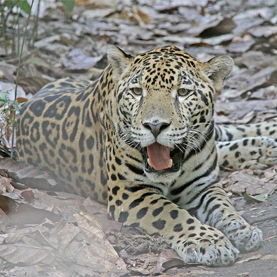
After years of legal wrangling, the U.S. Fish and Wildlife Service has granted jaguars protected territory
As humans encroached on their territory, the endangered cats' range shifted south. Today it stretches from northern Argentina into Mexico's Sonoran Desert. But jaguars cross into the American Southwest frequently enough for some conservationists to argue that they deserve critical habitat protection. Now, after years of legal wrangling, the U.S. Fish and Wildlife Service (FWS) has agreed. In a plan (pdf) published yesterday, the agency proposed designating 838,232 acres—an area larger than Rhode Island—as critical jaguar habitat. That means federal agencies cannot fund or authorize any activities that might "adversely modify" the earmarked land, which covers four stretches of mountain in southeastern Arizona, a section of the Peloncillo Mountains on the Arizona–New Mexico border, and a tiny piece of New Mexico's San Luis Mountains. It includes the site of a proposed copper mine in Arizona's Santa Rita Mountains, which will have to be carefully evaluated for its potential impact on jaguar habitat if the proposal is approved later this year, following a period of peer review, public comment (pdf) and economic analysis.
It is a dramatic step for the FWS, which has been dragging its feet on jaguars for years. The conservation group Center for Biological Diversity (CBD) first sued the FWS in 2003 to designate critical habitat and develop a recovery plan for the cats, which have been listed as endangered since 1997. The FWS determined that the species didn't need special protection in the U.S. to survive, compelling the CBD to file another lawsuit in 2007. Then, in 2009, controversy erupted over the death of a jaguar known as Macho B, a male that had been captured in Arizona's Atascosa Mountains, fitted with a radio collar and released, only to be later euthanized after he was found ailing. Macho B's death added urgency to the issue, and a few weeks later a federal district court agreed with the CBD, mandating that the FWS reconsider its previous decision not to grant jaguars critical habitat. Yesterday's proposal was the result of that ruling and includes the canyon in the Atascosa Mountains where Macho B lived.
The FWS reversal should help quell a long-standing debate among conservationists, scientists, government officials, ranchers and local residents about how vital U.S. territory is to the preservation of the species. Although the designated area represents the northernmost part of the jaguar's range, the FWS proposal argues that peripheral populations are essential to the species because their adaptation to different environmental conditions strengthens evolutionary diversity. Michael Robinson of the CBD praised the plan but wishes it went further. "These sky island mountain ranges near the border with Mexico are vital for jaguars to move into the United States," he says. "But we propose adding the Gila and Apache national forests in, respectively, New Mexico and Arizona, where roads are few and prey plentiful, in order to provide habitat for more jaguars, which could genetically bolster the population in northern Mexico."
Stealthy and mystical, jaguars (Panthera onca) lived primarily in North America until the Pleistocene epoch ended around 12,000 years ago, according to the anthropological records of the American Museum of Natural History. Since 1963 only male jaguars have been spotted in the U.S., and then only in south-central Arizona and southwestern New Mexico. "Counting cryptic carnivores is very, very difficult," says Howard Quigley, the executive director of the Jaguar Program of the wild cat conservation group, Panthera, and a co-leader of the Jaguar Recovery Team, a group of scientists and other experts whom the FWS convened to advise the government on its decision.
Some conservationists have long argued that jaguars belong in the American Southwest. Robinson says the cats are part of Arizona's historical flora and fauna and have inherent value to the ecosystem. He also says the government essentially owes them critical habitat, because the animals' demise has come largely at the hands of the government itself. Between 1918 and 1964, records show, a federal predator extermination program killed tens of thousands of wolves and coyotes, along with an unspecified number of jaguars, probably numbering in the dozens. Furthermore, the government initially failed to list jaguars under the 1973 Endangered Species Act—an oversight that took more than 25 years to rectify. The American Society of Mammalogists outlined the same arguments in a 2007 resolution calling for FWS to develop a jaguar recovery plan and delineate critical habitat. With the jaguar's range steadily shrinking, the resolution said, U.S. habitat is "vital to the long-term resilience and survival of the species, especially in response to ongoing climate change." Indeed, fringe populations are crucial to the preservation of a species, says Carlos López González, a Mexican biologist and co-leader of the Jaguar Recovery Team, who has been documenting the cats in northern Mexico since 1997, because they're part of the historical range. "Peripheral animals at the edge of a species are probably the animals that are more adaptable to climate change, global warming, drought and so on," he says.
Other prominent conservationists have argued it is a waste of time and money to focus on jaguar recovery in the U.S. Southwest. Alan Rabinowitz, Panthera's co-founder and president,agrees that fringe populations are critical to a species's preservation—provided they are resident or breeding populations. The closest breeding population to the Arizona border is more than 200 kilometers south in Mexico's state of Sonora. After Macho B's death, when the federal district court ordered FWS to reverse its position on critical habitat designation, Rabinowitz issued a swift rebuke on The New York Times op-ed page, calling the move "a slap in the face to good science." He wrote that the American southwest is "at best, marginal habitat for the animals," arguing that jaguar conservation efforts would be better directed at preserving "corridors" that link breeding populations with one another south of the border. He doesn't dispute that jaguars regularly cross the Mexican border into Arizona and New Mexico, but maintains they don't stay long. "There's something there that they don't like," he says. "If it was habitat they liked and could settle, why go back and forth?"
The best hope for jaguar recovery in the U.S. may lie in diverting resources across the border. "There's great science and money going into jaguar conservation in North America," Quigley says. "I would love to see it head south." Whereas Endangered Species Act funding may technically be used outside the U.S., it is rarely deployed that way. In October 2010 the U.S. Department of Homeland Security earmarked $6.8 million to fund conservation efforts—including just under $3 million "to survey and monitor jaguars and their habitat in Arizona"—in an agreement with U.S. Customs and Border Protection aimed at mitigating the impact of border security projects, such as the fence designed to deter illegal immigration. "The bad news is all the money has to be spent north of the border where there's one jaguar every three years," Quigley says. "We all realize the work needs to be done south of the border. It's horribly ironic and sad." He cites parts of the genetic corridor from Colombia to the central-southern Amazon that are critical to jaguar survival but receive no funding or attention. As the northernmost breeding center, Sonora is also key. "If we want to have jaguars in Arizona, there have to be more resources provided to Mexico," says López González, who has established incentive programs for Mexican ranchers to set photo traps for jaguars rather than kill them. Quigley says other such programs are beginning to win funding south of the border. "Our real purpose is to make sure the two core areas [Jalisco and Sonora] are preserved and there is genetic connectivity between them," he says. "If we do that right, there will be two or three jaguars that come across the border now and then." And someday, maybe more.
Link
Wednesday, May 9, 2012
Endangered-species truce faces big test from little sand dunes lizard
It wasn’t too hard for the Fish and Wildlife Service to decide the
fate of 92 freshwater snails, or 17 dragonflies, or indeed more than 500
species over the past year. But when it comes to the dunes sagebrush lizard, trouble looms.
The small spiny reptile seeks refuge from the hot sun and potential predators in the shinnery oak dunes of southeastern New Mexico and West Texas. Ranchers have been clearing the oak shrubs, and oil and gas companies are drilling in the dunes. If the lizard is designated as an endangered species, some of those activities could be in jeopardy.
The lizard’s future is among the first in a series of wrenching tests threatening what has been a year-long cease-fire in the fight over endangered-species listings.
Since two environmental groups reached landmark settlement agreements last year with the Fish and Wildlife Service, the government has resolved dozens of long-standing cases. State and industry officials who spent years largely resisting conservation efforts are now scrambling to protect imperiled species in the hopes of keeping them off the federal endangered-species list.
But now the Obama administration must decide whether to provide federal protection to a handful of animals that share their habitat with oil and gas rigs, cattle and wind turbines. And groups on both sides of the debate are skeptical of whether federal officials can make fair decisions — several of which will have ramifications for swing states in the West — in a presidential election year.
“Clearly the notion that there’s a truce is very fragile,” said Defenders of Wildlife President Jamie Rappaport Clark, who headed the Fish and Wildlife Service under President Bill Clinton.
According to last year’s settlements, WildEarth Guardians agreed to curtail its petitions and lawsuits aimed at the Fish and Wildlife Service and the Center for Biological Diversity agreed to space out its litigation, in exchange for a commitment that the agency will issue protection decisions for 841 plants and animals.
“This settlement gave us the breathing room to really focus on conservation, which is really what the [Endangered Species Act] is about,” said Fish and Wildlife Service Director Dan Ashe. “We’re really able to focus our conservation effort.”
In fiscal year 2011, the agency made more positive listing decisions, 539, than in any year in the law’s 39-year history. But those decisions — that a species deserved federal protection or warranted further review — covered those whose conservation did not have huge economic implications, such as mollusks in the Pacific Northwest and springsnails in the West’s Great Basin region.
“It’s the calm before the storm,” said Sen. James M. Inhofe (Okla.), the top Republican on the Senate Environment and Public Works Committee.
The dunes sagebrush lizard
The storm may start with the dunes sagebrush lizard, first listed as a candidate for federal protection in 1982. Since then its habitat has been reduced by 40 percent. Fish and Wildlife proposed listing the animal, also known as the sand dunes lizard, as endangered in December 2010.
The agency was set to issue a final decision a year later but delayed doing so by six months in the face of fierce congressional resistance. Now it must decide by mid-June what to do about the lizard. Some of its habitat overlaps with the oil-rich Permian Basin, which produces 17 percent of the nation’s annual onshore oil supply.
Permian Basin Petroleum Association President Ben Shepperd, whose group represents 900 oil and gas producers in New Mexico and Texas, estimates that the association has spent between $500,000 and $1 million on consultants who have conducted their own census of the lizard and challenged several aspects of agency’s listing proposal.
“The evidence does not point to a threat to this species,” Shepperd said, adding that his members fear this decision — along with ones on the lesser prairie chicken and spot-tailed earless lizard, also mandated under the settlement agreement — could restrict oil and gas drilling. “We think the impact is in the billions of dollars.”
Rep. K. Michael Conaway (R-Tex.), who has threatened to block Fish and Wildlife from listing the dunes sagebrush lizard, said the agency needs to prove it can do a better job of taking economic considerations into account in listing decisions.
“We have to factor that into what we can and cannot do,” he said.
The agency cannot take economics into consideration when making a listing decision, though it can factor in economic impact when drafting plans to conserve listing species.
“The listing decision is a scientific diagnosis,” Ashe said. “Once that’s been made, you can take into account other factors.”
Advocates for the lizard call Shepperd’s dire economic predictions exaggerated. Its historic habitat accounts for just 2 percent of the Permian basin, said Center for Biological Diversity Executive Director Kieran Suckling, and federal officials have already indicated they will not prohibit energy exploration on that entire range.
One of the main reasons why the lizard may not mean economic doom for New Mexico and Texas oil and gas firms lies in the “candidate conservation agreements” they have just forged, under which they voluntarily agree to protect its range. New Mexico now has a plan for 93 percent of the lizard’s habitat. Private companies contributed at least $2.5 million to invest in sand dune lizard conservation and pledged to consider voluntary steps that include removing well pads and roads on abandoned wells and designating buffers of more than 600 feet around sand dune complexes where the lizards live. Texas is still assembling a program.
In Texas, the comptroller will enter into an agreement with private landholders; in New Mexico, a nonprofit organization will oversee the pact.
Ashe said the plans are encouraging, adding that it is not clear yet whether it will be enough to avoid listing the lizard.
The lesser prairie chicken
Western oil and gas drillers are not the only ones scrambling to protect vulnerable species as a way of keeping them from being added to the endangered list. Fish and Wildlife must decide by Sept. 30 whether to propose listing the lesser prairie chicken, a grayish-brown grouse that lives in Colorado, Kansas, New Mexico, Oklahoma and Texas. In 2015, it must decide whether to list the greater sage grouse, whose historic habitat traverses 11 states.
Tyler Powell, director of Oklahoma’s Office of the Secretary of the Environment, estimated that he spends a fifth of his time working to keep the lesser prairie chicken off the endangered-species list. The state hired two firms to develop a management plan that aims to minimize conflicts between the bird — which rams into ranchers’ fences and is deterred from nesting by tall wind turbines — and the energy and farming sector in northwest Oklahoma.
“We think we’ve started to get some room where we’ve shown we’ve taken this seriously and we’re going to take every effort possible to conserve the species,” Powell said.
Inhofe, who initially held up Ashe’s nomination as director over the issue, pressed Ashe last week over whether he would provide Oklahoma with “flexibility” in terms of the listing. In an interview, Ashe said that could mean a six-month delay in finalizing a proposed listing decision, which otherwise would come at the end of 2013.
Chermac Energy President Jaime McAlpine, who has developed three wind farms in the bird’s historic habitat and is considering three more projects in its range, recently agreed to pay $2.5 million for lesser prairie chicken habitat conservation as part of a transmission line deal with the state wildlife department.
“Needless to say, I reluctantly agreed to pay,” McAlpine said. “Economic development is hard enough as it is.”
Mark Salvo, wildlife program director at WildEarth Guardians, questioned whether these efforts will be enough to help the lesser prairie chicken.
“There is no reason why states shouldn’t have been working to protect and recover the species years ago,” he said, noting it has been on the candidate list for a decade.
Even when the law has produced successes, it is not without controversy. A year ago, Congress voted to take gray wolves in the northern Rockies off the endangered-species list, ratifying a decision by Fish and Wildlife that had been blocked by a federal judge. Idaho recently ended a hunting and trapping season in which nearly 40 percent of the state’s gray wolf population was killed.
Clark, of Defenders of Wildlife, described the gray-wolves situation as “a powder keg ready to go off.”
“You can’t just go from fragile recovery to open season in a blink of an eye, and that’s what’s happening,” she said.

The small spiny reptile seeks refuge from the hot sun and potential predators in the shinnery oak dunes of southeastern New Mexico and West Texas. Ranchers have been clearing the oak shrubs, and oil and gas companies are drilling in the dunes. If the lizard is designated as an endangered species, some of those activities could be in jeopardy.
The lizard’s future is among the first in a series of wrenching tests threatening what has been a year-long cease-fire in the fight over endangered-species listings.
Since two environmental groups reached landmark settlement agreements last year with the Fish and Wildlife Service, the government has resolved dozens of long-standing cases. State and industry officials who spent years largely resisting conservation efforts are now scrambling to protect imperiled species in the hopes of keeping them off the federal endangered-species list.
But now the Obama administration must decide whether to provide federal protection to a handful of animals that share their habitat with oil and gas rigs, cattle and wind turbines. And groups on both sides of the debate are skeptical of whether federal officials can make fair decisions — several of which will have ramifications for swing states in the West — in a presidential election year.
“Clearly the notion that there’s a truce is very fragile,” said Defenders of Wildlife President Jamie Rappaport Clark, who headed the Fish and Wildlife Service under President Bill Clinton.
According to last year’s settlements, WildEarth Guardians agreed to curtail its petitions and lawsuits aimed at the Fish and Wildlife Service and the Center for Biological Diversity agreed to space out its litigation, in exchange for a commitment that the agency will issue protection decisions for 841 plants and animals.
“This settlement gave us the breathing room to really focus on conservation, which is really what the [Endangered Species Act] is about,” said Fish and Wildlife Service Director Dan Ashe. “We’re really able to focus our conservation effort.”
In fiscal year 2011, the agency made more positive listing decisions, 539, than in any year in the law’s 39-year history. But those decisions — that a species deserved federal protection or warranted further review — covered those whose conservation did not have huge economic implications, such as mollusks in the Pacific Northwest and springsnails in the West’s Great Basin region.
“It’s the calm before the storm,” said Sen. James M. Inhofe (Okla.), the top Republican on the Senate Environment and Public Works Committee.
The dunes sagebrush lizard
The storm may start with the dunes sagebrush lizard, first listed as a candidate for federal protection in 1982. Since then its habitat has been reduced by 40 percent. Fish and Wildlife proposed listing the animal, also known as the sand dunes lizard, as endangered in December 2010.
The agency was set to issue a final decision a year later but delayed doing so by six months in the face of fierce congressional resistance. Now it must decide by mid-June what to do about the lizard. Some of its habitat overlaps with the oil-rich Permian Basin, which produces 17 percent of the nation’s annual onshore oil supply.
Permian Basin Petroleum Association President Ben Shepperd, whose group represents 900 oil and gas producers in New Mexico and Texas, estimates that the association has spent between $500,000 and $1 million on consultants who have conducted their own census of the lizard and challenged several aspects of agency’s listing proposal.
“The evidence does not point to a threat to this species,” Shepperd said, adding that his members fear this decision — along with ones on the lesser prairie chicken and spot-tailed earless lizard, also mandated under the settlement agreement — could restrict oil and gas drilling. “We think the impact is in the billions of dollars.”
Rep. K. Michael Conaway (R-Tex.), who has threatened to block Fish and Wildlife from listing the dunes sagebrush lizard, said the agency needs to prove it can do a better job of taking economic considerations into account in listing decisions.
“We have to factor that into what we can and cannot do,” he said.
The agency cannot take economics into consideration when making a listing decision, though it can factor in economic impact when drafting plans to conserve listing species.
“The listing decision is a scientific diagnosis,” Ashe said. “Once that’s been made, you can take into account other factors.”
Advocates for the lizard call Shepperd’s dire economic predictions exaggerated. Its historic habitat accounts for just 2 percent of the Permian basin, said Center for Biological Diversity Executive Director Kieran Suckling, and federal officials have already indicated they will not prohibit energy exploration on that entire range.
One of the main reasons why the lizard may not mean economic doom for New Mexico and Texas oil and gas firms lies in the “candidate conservation agreements” they have just forged, under which they voluntarily agree to protect its range. New Mexico now has a plan for 93 percent of the lizard’s habitat. Private companies contributed at least $2.5 million to invest in sand dune lizard conservation and pledged to consider voluntary steps that include removing well pads and roads on abandoned wells and designating buffers of more than 600 feet around sand dune complexes where the lizards live. Texas is still assembling a program.
In Texas, the comptroller will enter into an agreement with private landholders; in New Mexico, a nonprofit organization will oversee the pact.
The lesser prairie chicken
Western oil and gas drillers are not the only ones scrambling to protect vulnerable species as a way of keeping them from being added to the endangered list. Fish and Wildlife must decide by Sept. 30 whether to propose listing the lesser prairie chicken, a grayish-brown grouse that lives in Colorado, Kansas, New Mexico, Oklahoma and Texas. In 2015, it must decide whether to list the greater sage grouse, whose historic habitat traverses 11 states.
Tyler Powell, director of Oklahoma’s Office of the Secretary of the Environment, estimated that he spends a fifth of his time working to keep the lesser prairie chicken off the endangered-species list. The state hired two firms to develop a management plan that aims to minimize conflicts between the bird — which rams into ranchers’ fences and is deterred from nesting by tall wind turbines — and the energy and farming sector in northwest Oklahoma.
“We think we’ve started to get some room where we’ve shown we’ve taken this seriously and we’re going to take every effort possible to conserve the species,” Powell said.
Inhofe, who initially held up Ashe’s nomination as director over the issue, pressed Ashe last week over whether he would provide Oklahoma with “flexibility” in terms of the listing. In an interview, Ashe said that could mean a six-month delay in finalizing a proposed listing decision, which otherwise would come at the end of 2013.
Chermac Energy President Jaime McAlpine, who has developed three wind farms in the bird’s historic habitat and is considering three more projects in its range, recently agreed to pay $2.5 million for lesser prairie chicken habitat conservation as part of a transmission line deal with the state wildlife department.
“Needless to say, I reluctantly agreed to pay,” McAlpine said. “Economic development is hard enough as it is.”
Mark Salvo, wildlife program director at WildEarth Guardians, questioned whether these efforts will be enough to help the lesser prairie chicken.
“There is no reason why states shouldn’t have been working to protect and recover the species years ago,” he said, noting it has been on the candidate list for a decade.
Even when the law has produced successes, it is not without controversy. A year ago, Congress voted to take gray wolves in the northern Rockies off the endangered-species list, ratifying a decision by Fish and Wildlife that had been blocked by a federal judge. Idaho recently ended a hunting and trapping season in which nearly 40 percent of the state’s gray wolf population was killed.
Clark, of Defenders of Wildlife, described the gray-wolves situation as “a powder keg ready to go off.”
“You can’t just go from fragile recovery to open season in a blink of an eye, and that’s what’s happening,” she said.

Sunday, May 6, 2012
NM Bootheel ranchers in fight with big landowner
By
CLOVERDALE, N.M.—Deep in New Mexico's Bootheel along the U.S.-Mexico border sits a historic 500-square mile ranch once owned by William Randolph Hearst. Now called the Diamond A Ranch and operated by Seth Hadley, a descendant of Anheuser-Busch founder Adolphus Busch, the large holding that straddles the New Mexico-Arizona border has been called one of the "Last Great Places" by environmentalists for its focus on saving wildlife.
But among the canyons of the Peloncillo Mountains and the serenity of the pinon-juniper woods of the Animas Mountains, Hadley and neighboring area ranchers are locked in an ongoing dispute over traditional ranch land usages and access to public lands and country roads. Smaller, area ranchers accuse Diamond A Ranch of routinely putting up fences on public land and trying to close roads by erecting gates with padlocks, a move that on at least one occasion drew an injunction from a state judge.
They also say Hadley's focus on environmental concerns, which sometimes result in vast chucks of land being set aside for wildlife, makes it harder for them to navigate through the sprawling ranch and keep up with usage rules.
All those moves, ranchers say, are slowly changing the way of life in the Bootheel as areas long visited by hunters, ranchers and originally by homesteaders are being shut out.
"I think (Diamond A Ranch) would rather ask for forgiveness rather than ask for permission," said Judy Keeler, a neighboring rancher who runs an 8,000-acre ranch. "We're friendly with them but it's been an ongoing battle."
A Diamond A Ranch spokeswoman declined to comment for this story.
Currently, the two sides are locked in a fight over a fence on Diamond A property that prevents hunters from parking to hunt in the Coronado National Forest.
The disputes between the ranchers and Diamond A also played out in January when the U.S. Border Patrol announced it would build an outpost on a plot owned by Diamond A rather than on U.S. Bureau of Land Management land closer to the border. For months prior to the U.S. Border Patrol's decision, ranchers had held meetings in nearby Lordsburg, N.M., signed petitions and wrote letters demanding that the border patrol build the outpost on federal land closer to the border.
Border Patrol officials have called the unforgiving terrain, where Geronimo made his last stand, one of the last unguarded regions between the United States and Mexico. They said the proposed outpost on Diamond A land made the most strategic sense in battling Mexican cartel traffickers who routinely travel through nearby mountains with carpet stuck to the bottoms of their shoes to hide their tracks.
Still, the decision only hardened the belief among some ranchers that Hadley's influence outweighed their concerns. "I wasn't surprised," said Meira Gault, 62, who along with her husband, Stephen, 71, operates a 20,000 acre ranch just north of the border. "He usually gets his way."
In 1993, the Hadley family bought what was then called the Gray Ranch. The Nature Conservancy included the Gray Ranch on its "Last Great Places" list, and the Hadley family gave portions to the Animas Foundation, an environmentally concerned group headed by the Hadley family.
Environmentalists immediately praised the ranching foundation for preserving and improving the ecosystem of the large ranch and for providing pastures for nearby drought-stricken ranches in a unique "Grassbank" arrangement that lets ranchers graze their cattle on the ranch in return for an agreement never to subdivide their own land.
But while Diamond A won praises from environmentalists, area ranchers complained that Hadley bought up smaller ranchs to increase his holdings, and also would put up fences on public land, regardless of complaints, preventing movement of cattle.
In 1997, a district judge ordered Hadley to remove the padlock he put on a cattle gate on County Road 2 near Cloverdale. Hadley said he owned the road built during the Mexican-American War, but county officials disagreed and said it was preventing others from using the public road built by the U.S. Army.
Despite the constant back and forth, area ranchers lament that the biggest transformation since the Hadleys bought the ranch has been a discontinuation of annual community events.
For example, families who descended from the area's original homesteaders used to hold reunions on land now owned by Diamond A. During a recent afternoon, an abandoned concrete dance floor could be seen among shrubs and grass.
"There used to be events here all the time and everyone would come together," said Gault. "That just doesn't happen anymore."
CLOVERDALE, N.M.—Deep in New Mexico's Bootheel along the U.S.-Mexico border sits a historic 500-square mile ranch once owned by William Randolph Hearst. Now called the Diamond A Ranch and operated by Seth Hadley, a descendant of Anheuser-Busch founder Adolphus Busch, the large holding that straddles the New Mexico-Arizona border has been called one of the "Last Great Places" by environmentalists for its focus on saving wildlife.
But among the canyons of the Peloncillo Mountains and the serenity of the pinon-juniper woods of the Animas Mountains, Hadley and neighboring area ranchers are locked in an ongoing dispute over traditional ranch land usages and access to public lands and country roads. Smaller, area ranchers accuse Diamond A Ranch of routinely putting up fences on public land and trying to close roads by erecting gates with padlocks, a move that on at least one occasion drew an injunction from a state judge.
They also say Hadley's focus on environmental concerns, which sometimes result in vast chucks of land being set aside for wildlife, makes it harder for them to navigate through the sprawling ranch and keep up with usage rules.
All those moves, ranchers say, are slowly changing the way of life in the Bootheel as areas long visited by hunters, ranchers and originally by homesteaders are being shut out.
"I think (Diamond A Ranch) would rather ask for forgiveness rather than ask for permission," said Judy Keeler, a neighboring rancher who runs an 8,000-acre ranch. "We're friendly with them but it's been an ongoing battle."
A Diamond A Ranch spokeswoman declined to comment for this story.
Currently, the two sides are locked in a fight over a fence on Diamond A property that prevents hunters from parking to hunt in the Coronado National Forest.
The disputes between the ranchers and Diamond A also played out in January when the U.S. Border Patrol announced it would build an outpost on a plot owned by Diamond A rather than on U.S. Bureau of Land Management land closer to the border. For months prior to the U.S. Border Patrol's decision, ranchers had held meetings in nearby Lordsburg, N.M., signed petitions and wrote letters demanding that the border patrol build the outpost on federal land closer to the border.
Border Patrol officials have called the unforgiving terrain, where Geronimo made his last stand, one of the last unguarded regions between the United States and Mexico. They said the proposed outpost on Diamond A land made the most strategic sense in battling Mexican cartel traffickers who routinely travel through nearby mountains with carpet stuck to the bottoms of their shoes to hide their tracks.
Still, the decision only hardened the belief among some ranchers that Hadley's influence outweighed their concerns. "I wasn't surprised," said Meira Gault, 62, who along with her husband, Stephen, 71, operates a 20,000 acre ranch just north of the border. "He usually gets his way."
In 1993, the Hadley family bought what was then called the Gray Ranch. The Nature Conservancy included the Gray Ranch on its "Last Great Places" list, and the Hadley family gave portions to the Animas Foundation, an environmentally concerned group headed by the Hadley family.
Environmentalists immediately praised the ranching foundation for preserving and improving the ecosystem of the large ranch and for providing pastures for nearby drought-stricken ranches in a unique "Grassbank" arrangement that lets ranchers graze their cattle on the ranch in return for an agreement never to subdivide their own land.
But while Diamond A won praises from environmentalists, area ranchers complained that Hadley bought up smaller ranchs to increase his holdings, and also would put up fences on public land, regardless of complaints, preventing movement of cattle.
In 1997, a district judge ordered Hadley to remove the padlock he put on a cattle gate on County Road 2 near Cloverdale. Hadley said he owned the road built during the Mexican-American War, but county officials disagreed and said it was preventing others from using the public road built by the U.S. Army.
Despite the constant back and forth, area ranchers lament that the biggest transformation since the Hadleys bought the ranch has been a discontinuation of annual community events.
For example, families who descended from the area's original homesteaders used to hold reunions on land now owned by Diamond A. During a recent afternoon, an abandoned concrete dance floor could be seen among shrubs and grass.
"There used to be events here all the time and everyone would come together," said Gault. "That just doesn't happen anymore."
Thursday, February 9, 2012
"Grazing Must Yield": Court Decision Protects Sage-Grouse Habitat in Idaho's Owyhee Canyonlands
Boise, ID — A federal court in Idaho issued a strong rebuke of the Bureau of Land Management (BLM) and required increased protections for Greater sage-grouse across a vast swath of southern Idaho. The ruling on Western Watersheds Project's legal challenge to livestock grazing in Idaho's Owyee Canyonlands found that BLM unlawfully failed to protect the region’s charismatic sage-grouse when it continued livestock grazing without making changes to protect the imperiled bird.
“Instead of acting to conserve sage-grouse, BLM did just the opposite,” said Katie Fite, biodiversity director of Western Watersheds Project, “it conserved cattle at the expense of sage-grouse.”
The action challenged BLM’s renewal of grazing permits on allotments in the BLM’s Owyhee and Bruneau Field Offices.
Despite admissions that key habitats for sage-grouse were being degraded by livestock on the allotments, BLM persisted in renewing grazing permits at the same levels of use and loosening restrictions on permit holders. This violated BLM's land use plans that require the agency to prioritize sensitive species, and the court held, "To the extend livestock and sage grouse are in conflict, it is grazing that must yield." The ruling has sweeping implications for the management of hundreds of similar grazing decisions under review.
In its 55-page order, the court found that BLM violated principle environmental laws and policies - including the National Environmental Policy Act, the Federal Land Policy and Management Act, and the Fundamentals of Rangeland Health, as well as the agency’s own governing land use plans - in approving unchanged livestock grazing on these public lands. Where the BLM had proposed changes, those changes were largely the addition of fencing which has known adverse impacts to sage grouse.
Western Watersheds Project was represented in this litigation by Todd Tucci of Advocates for the West in Boise.
“Instead of acting to conserve sage-grouse, BLM did just the opposite,” said Katie Fite, biodiversity director of Western Watersheds Project, “it conserved cattle at the expense of sage-grouse.”
The action challenged BLM’s renewal of grazing permits on allotments in the BLM’s Owyhee and Bruneau Field Offices.
Despite admissions that key habitats for sage-grouse were being degraded by livestock on the allotments, BLM persisted in renewing grazing permits at the same levels of use and loosening restrictions on permit holders. This violated BLM's land use plans that require the agency to prioritize sensitive species, and the court held, "To the extend livestock and sage grouse are in conflict, it is grazing that must yield." The ruling has sweeping implications for the management of hundreds of similar grazing decisions under review.
In its 55-page order, the court found that BLM violated principle environmental laws and policies - including the National Environmental Policy Act, the Federal Land Policy and Management Act, and the Fundamentals of Rangeland Health, as well as the agency’s own governing land use plans - in approving unchanged livestock grazing on these public lands. Where the BLM had proposed changes, those changes were largely the addition of fencing which has known adverse impacts to sage grouse.
Western Watersheds Project was represented in this litigation by Todd Tucci of Advocates for the West in Boise.
Wednesday, November 9, 2011
Lizard loses a vote
SANTA FE — The region's most controversial reptile lost a vote Monday at Capitol, but the decision by New Mexico legislators may not carry any weight.
Ten members of the natural resources committee voted to publicly oppose listing the dunes sagebrush lizard as an endangered species. They will send a letter expressing their sentiment to Daniel Ashe, director of the U.S. Fish and Wildlife Service.
Four Democrats on the committee dissented. They included two from southern New Mexico, Rep. Joseph Cervantes of Las Cruces and Sen. Mary Jane Garcia of Dona Ana. Their objection will be added to the end of the letter.
Ashe is to decide by Dec. 14 whether the dunes sagebrush lizard should be designated as an endangered species.
State Rep. Paul Bandy, R-Aztec, led the opposition to federal protection for the reptile.
He said such a move could hurt businesses, especially ranchers and oil and gas producers.
The dunes sagebrush lizard is found in a total of eight counties in the oil-producing Permian Basin. Four are in southeastern New Mexico and the others are in West Texas.
Bandy's letter, endorsed by a mix of Republicans, Democrats and an independent, asks that the decision on the lizard be delayed for a year.
Citing no sources or scientific data, Bandy wrote that listing the lizard as endangered would "delay or even curtail livestock grazing and oil and gas development in southeastern New Mexico..."
State Rep. Brian Egolf, D-Santa Fe, left the meeting before the vote, but he criticized Bandy's letter on his way out the door.
"Typical sky is falling, scared of science, nonsensical position," Egolf said.
Conservationists say that the dunes sagebrush lizard occupies about 1 percent of the Permian Basin, and listing it would have minimal or no effect on the economy. But the oil and gas industry has closed ranks and is unanimous in opposing federal protection for the reptile.
Rep. Andy Nunez, an independent from Hatch, voted against protection for the lizard. One reason was his distrust for a particular conservation group, the Center for Biological Diversity.
"Whatever they say, I don't believe," Nunez said.
Two Democrats, Sen. George Munoz of Gallup and Rep. Thomas Garcia of Ocate, stood with Republicans and Nunez in opposing the reptile.
The dunes sagebrush lizard is about the size of a human hand. It can live only in dunes with the shrub shinnery oak.
Bandy in a September special session sponsored a memorial calling for a delay in listing the lizard. Democrats killed that proposal in another committee, but he rebounded for a smaller win Monday.
How much weight Bandy's letter will carry is anybody's guess.
The federal government's deadline for public comments on the lizard expired in May.
As for a delay in the listing, Tom Buckley of the U.S. Fish and Wildlife Service in Albuquerque, said that would be unlikely.
A decision on whether to list the lizard as endangered would be postponed only if experts were stalemated on scientific data, Buckley said.
The dunes sagebrush lizard exists in the New Mexico counties of Chaves, Eddy, Lea and Roosevelt. It also is found in Andrews, Gaines, Ward and Winkler counties in Texas.
Santa Fe Bureau Chief Milan Simonich can be reached at msimonich@tnmnp.com or 505-820-6898. His blog is at nmcapitolreport.com.
Ten members of the natural resources committee voted to publicly oppose listing the dunes sagebrush lizard as an endangered species. They will send a letter expressing their sentiment to Daniel Ashe, director of the U.S. Fish and Wildlife Service.
Four Democrats on the committee dissented. They included two from southern New Mexico, Rep. Joseph Cervantes of Las Cruces and Sen. Mary Jane Garcia of Dona Ana. Their objection will be added to the end of the letter.
Ashe is to decide by Dec. 14 whether the dunes sagebrush lizard should be designated as an endangered species.
State Rep. Paul Bandy, R-Aztec, led the opposition to federal protection for the reptile.
He said such a move could hurt businesses, especially ranchers and oil and gas producers.
The dunes sagebrush lizard is found in a total of eight counties in the oil-producing Permian Basin. Four are in southeastern New Mexico and the others are in West Texas.
Bandy's letter, endorsed by a mix of Republicans, Democrats and an independent, asks that the decision on the lizard be delayed for a year.
Citing no sources or scientific data, Bandy wrote that listing the lizard as endangered would "delay or even curtail livestock grazing and oil and gas development in southeastern New Mexico..."
State Rep. Brian Egolf, D-Santa Fe, left the meeting before the vote, but he criticized Bandy's letter on his way out the door.
"Typical sky is falling, scared of science, nonsensical position," Egolf said.
Conservationists say that the dunes sagebrush lizard occupies about 1 percent of the Permian Basin, and listing it would have minimal or no effect on the economy. But the oil and gas industry has closed ranks and is unanimous in opposing federal protection for the reptile.
Rep. Andy Nunez, an independent from Hatch, voted against protection for the lizard. One reason was his distrust for a particular conservation group, the Center for Biological Diversity.
"Whatever they say, I don't believe," Nunez said.
Two Democrats, Sen. George Munoz of Gallup and Rep. Thomas Garcia of Ocate, stood with Republicans and Nunez in opposing the reptile.
The dunes sagebrush lizard is about the size of a human hand. It can live only in dunes with the shrub shinnery oak.
Bandy in a September special session sponsored a memorial calling for a delay in listing the lizard. Democrats killed that proposal in another committee, but he rebounded for a smaller win Monday.
How much weight Bandy's letter will carry is anybody's guess.
The federal government's deadline for public comments on the lizard expired in May.
As for a delay in the listing, Tom Buckley of the U.S. Fish and Wildlife Service in Albuquerque, said that would be unlikely.
A decision on whether to list the lizard as endangered would be postponed only if experts were stalemated on scientific data, Buckley said.
The dunes sagebrush lizard exists in the New Mexico counties of Chaves, Eddy, Lea and Roosevelt. It also is found in Andrews, Gaines, Ward and Winkler counties in Texas.
Santa Fe Bureau Chief Milan Simonich can be reached at msimonich@tnmnp.com or 505-820-6898. His blog is at nmcapitolreport.com.
Thursday, September 29, 2011
A Far Reaching Court Victory for Western Watersheds Project
Friends,
Western Watersheds Project (WWP) has won a great court victory !!!
Judge B. Lynn Winmill’s Order of today (9/28) rules in favor of Western Watersheds Project's challenge to 16 Bureau of Land Management Resource Management Plans (RMPs) in 6 western states covering over 30,000,000 acres of public land.

This Order addresses the WWP challenge to two of the RMPs that are serving as test cases for all 16 Resource Management Plans being challenged. These two test cases are for the Craters of the Moon National Monument and Preserve RMP in Idaho and the Pinedale RMP in western Wyoming.
The federal court has granted summary judgment to WWP on both FLPMA and NEPA claims and denied all summary judgment claims by the BLM and intervenors.
This case will resonate in many ways including, in particular, the failure of the BLM to consider overall cumulative effects of all permitted activities and all impacts on Greater Sage Grouse. The Order also strongly addresses failure of the BLM to comply with its own sensitive species policy and its national sage grouse conservation policy.
WWP’s excellent legal representation in this case is by Laird Lucas of Advocates for the West in Boise.
All-in-all this is a very important win for western public lands management and all native sage-steppe wildlife including greater sage grouse.
Western Watersheds Project (WWP) has won a great court victory !!!
Judge B. Lynn Winmill’s Order
of today (9/28) rules in favor of Western Watersheds Project's challenge to 16 Bureau of Land Management Resource Management Plans (RMPs) in 6 western states covering over 30,000,000 acres of public land.This Order addresses the WWP challenge to two of the RMPs that are serving as test cases for all 16 Resource Management Plans being challenged. These two test cases are for the Craters of the Moon National Monument and Preserve RMP in Idaho and the Pinedale RMP in western Wyoming.
The federal court has granted summary judgment to WWP on both FLPMA and NEPA claims and denied all summary judgment claims by the BLM and intervenors.
This case will resonate in many ways including, in particular, the failure of the BLM to consider overall cumulative effects of all permitted activities and all impacts on Greater Sage Grouse. The Order also strongly addresses failure of the BLM to comply with its own sensitive species policy and its national sage grouse conservation policy.
WWP’s excellent legal representation in this case is by Laird Lucas of Advocates for the West in Boise.
All-in-all this is a very important win for western public lands management and all native sage-steppe wildlife including greater sage grouse.
Monday, January 31, 2011
Oregon ranchers fear financial hit from court-ordered loss of grazing territory
Rancher Ken Brooks is standing in his ranch yard near the ghost town of Fox , his eyes sweeping the timber-covered Malheur National Forest that holds the key to his future and that of 18 other Grant County ranching families.
"They're all pretty angry," he said. "We're all in the same boat. We're unsure what we're going to do. And most of all, we're unsure of the reason we have to do it."
A Dec. 30 ruling by U.S. District Judge Ancer Haggerty prohibits the ranchers from turning their cattle out on seven summertime U.S. Forest Service grazing allotments to protect threatened Middle Columbia River steelhead.
The latest decision in a years-long battle over the effects of grazing on stream habitat bans cows on 16 percent of the 1.7 million-acre forest, which has one the largest grazing programs of any forest in the Pacific Northwest.
The ban starts in June and would affect almost 4,000 mother cows and their annual calf crop valued at $2.8 million, ranchers and forest officials said.
Environmentalists who filed the steelhead lawsuit said the Forest Service and National Marine Fisheries Service must do a better job enforcing laws to preserve stream banks from roaming cattle.
"The court makes clear that the agencies have to make steelhead protection their highest priority," said Brent Fenty , executive director of the 1,400-member Oregon Natural Desert Association.
But outside the courtroom, Grant County is bracing for the economic repercussions, said county Commissioner Boyd Briton.
"There are families involved, there are employees," Briton said. "All those cows, the feed stores, the Les Schwab tire store downtown, the grocery stores, it affects all of us."
The sprawling, mountainous county has a single stoplight, no rail or interstate highway access, only three fast-food restaurants, one theater in an old Rebekah Lodge and a mere 7,500 residents on land twice the size of Delaware.
The county already is coping with unemployment higher than 14 percent. The 19 ranchers affected by the judge's decision represent about 20 percent of those who hold grazing permits on the Malheur.
The overall hit from the ban, perhaps 60 jobs, is the equivalent of losing roughly 7,000 jobs in Multnomah County, said Mark Webb, Grant County commission chairman.
Brooks, whose family has ranched between Fox and Mount Vernon for a century, expects some of his neighbors to quit ranching. He would have to reduce his herd from 450 to 150 cows, he said.
A reduction that dramatic would force him to lay off his two cowhands, he said, including one who's worked for the family since 1975.
The judge's ruling surprised John Grubel, a Forest Service district ranger in John Day, and Spencer Hovekamp, a branch chief with the National Marine Fisheries Service in La Grande.
Both said ranchers have made significant strides in the last two years toward meeting government stream bank standards.
Hovekamp, a fish biologist who keeps track of John Day River system steelhead, said recent adult returns have been high -- mostly due to favorable ocean conditions and not, as some ranchers claim, owing to improved range management. Ranchers also blame habitat problems on wild horses and elk.
Still, they "are putting in a lot of work" riding the allotments on horseback, monitoring cattle, repairing fences and shutting gates left open by other forest users so cows and calves stay out of areas where they aren't supposed to be, said Jeff Shinn, a Forest Service spokesman in John Day.
Hovekamp also noted that some problems are out of ranchers' control, including logging reductions and wildfire suppression that contribute to canopy shade that leaves less grass for grazing.
"Where the grass remains lush and growing is near streams," he said, and that's where grazing has the biggest potential impact on fish.
The grazing ban doesn't leave them many other options, ranchers said.
Private summertime pasture is relatively scarce. More than 60 percent of Grant County is federally managed, and ranches tend to be at low elevations and devoted to summertime hay production to feed cattle in winter.
Brooks, for example, owns 9,000 acres, but he needs to set aside some to produce 800 tons of hay, and much of the rest is in parcels scattered among federal allotments. Grazing those tracts while keeping his cows off enjoined federal lands would mean building 18 miles of fence at a cost of $10,000 per mile, he said. He can't afford that.
The one hope for ranchers is if a new biological opinion can be drafted by the Forest Service and approved by the National Marine Fisheries Service before June, showing that cattle can graze on those allotments without harming fish runs.
But Hovekamp said getting that done in time "doesn't seem likely" with a large and complicated grazing program. A more reasonable deadline would be June 2012, he said.
The quandary for ranchers is what to do now:
Should they hold onto their herds, gambling that they'll find summer pasture or that the judge will relent on the timetable? Or should they sell?
"The price is highest for cow-calf pairs in January and February," Hovekamp said.
-- Richard Cockle
Grazing battles
U.S. District Judge Anser Haggerty's ruling is the latest in a series of legal squabbles over the Middle and Lower John Day River and its North Fork and Middle Fork subbasins.
2003: The Oregon Natural Desert Association, Center for Biological Diversity and Western Watersheds sued the National Marine Fisheries Service, claiming Middle Columbia steelhead -- federally listed as threatened in 1999 -- have declined below historic levels because of stream bank damage caused by livestock.
2008: A ruling by Haggerty halted grazing on 100,000 acres of the Malheur National Forest.
June 2009: Haggerty reversed the 2008 order and denied a request by environmentalists to halt grazing on another 200,000 acres on the Malheur. The reversal allowed livestock to return to the Murderer's Creek and Lower Middle Fork John Day River allotments. The judge also allowed grazing on other allotments that environmentalists wanted off-limits to cattle. At the same time, ranchers and the U.S. Forest Service agreed to rest the so-called Long Creek allotment from grazing.
2010: Haggerty closes grazing on seven Malheur allotments encompassing 283,000 acres, starting in June 2011.
2011: The Hells Canyon Preservation Council and Oregon Natural Desert Association file a separate, major lawsuit challenging the U.S. Forest Service's renewal of grazing permits on the Malheur, Wallowa-Whitman and Umatilla national forests. Environmentalists charge that grazing was improperly reauthorized on more than 250,000 acres of public lands without thoroughly assessing the effects and without adequate public disclosure, among other things.
"They're all pretty angry," he said. "We're all in the same boat. We're unsure what we're going to do. And most of all, we're unsure of the reason we have to do it."
A Dec. 30 ruling by U.S. District Judge Ancer Haggerty prohibits the ranchers from turning their cattle out on seven summertime U.S. Forest Service grazing allotments to protect threatened Middle Columbia River steelhead.
The latest decision in a years-long battle over the effects of grazing on stream habitat bans cows on 16 percent of the 1.7 million-acre forest, which has one the largest grazing programs of any forest in the Pacific Northwest.
The ban starts in June and would affect almost 4,000 mother cows and their annual calf crop valued at $2.8 million, ranchers and forest officials said.
Environmentalists who filed the steelhead lawsuit said the Forest Service and National Marine Fisheries Service must do a better job enforcing laws to preserve stream banks from roaming cattle.
"The court makes clear that the agencies have to make steelhead protection their highest priority," said Brent Fenty , executive director of the 1,400-member Oregon Natural Desert Association.
But outside the courtroom, Grant County is bracing for the economic repercussions, said county Commissioner Boyd Briton.
"There are families involved, there are employees," Briton said. "All those cows, the feed stores, the Les Schwab tire store downtown, the grocery stores, it affects all of us."
The sprawling, mountainous county has a single stoplight, no rail or interstate highway access, only three fast-food restaurants, one theater in an old Rebekah Lodge and a mere 7,500 residents on land twice the size of Delaware.
The county already is coping with unemployment higher than 14 percent. The 19 ranchers affected by the judge's decision represent about 20 percent of those who hold grazing permits on the Malheur.
The overall hit from the ban, perhaps 60 jobs, is the equivalent of losing roughly 7,000 jobs in Multnomah County, said Mark Webb, Grant County commission chairman.
Brooks, whose family has ranched between Fox and Mount Vernon for a century, expects some of his neighbors to quit ranching. He would have to reduce his herd from 450 to 150 cows, he said.
A reduction that dramatic would force him to lay off his two cowhands, he said, including one who's worked for the family since 1975.
The judge's ruling surprised John Grubel, a Forest Service district ranger in John Day, and Spencer Hovekamp, a branch chief with the National Marine Fisheries Service in La Grande.
Both said ranchers have made significant strides in the last two years toward meeting government stream bank standards.
Hovekamp, a fish biologist who keeps track of John Day River system steelhead, said recent adult returns have been high -- mostly due to favorable ocean conditions and not, as some ranchers claim, owing to improved range management. Ranchers also blame habitat problems on wild horses and elk.
Still, they "are putting in a lot of work" riding the allotments on horseback, monitoring cattle, repairing fences and shutting gates left open by other forest users so cows and calves stay out of areas where they aren't supposed to be, said Jeff Shinn, a Forest Service spokesman in John Day.
Hovekamp also noted that some problems are out of ranchers' control, including logging reductions and wildfire suppression that contribute to canopy shade that leaves less grass for grazing.
"Where the grass remains lush and growing is near streams," he said, and that's where grazing has the biggest potential impact on fish.
The grazing ban doesn't leave them many other options, ranchers said.
Private summertime pasture is relatively scarce. More than 60 percent of Grant County is federally managed, and ranches tend to be at low elevations and devoted to summertime hay production to feed cattle in winter.
Brooks, for example, owns 9,000 acres, but he needs to set aside some to produce 800 tons of hay, and much of the rest is in parcels scattered among federal allotments. Grazing those tracts while keeping his cows off enjoined federal lands would mean building 18 miles of fence at a cost of $10,000 per mile, he said. He can't afford that.
The one hope for ranchers is if a new biological opinion can be drafted by the Forest Service and approved by the National Marine Fisheries Service before June, showing that cattle can graze on those allotments without harming fish runs.
But Hovekamp said getting that done in time "doesn't seem likely" with a large and complicated grazing program. A more reasonable deadline would be June 2012, he said.
The quandary for ranchers is what to do now:
Should they hold onto their herds, gambling that they'll find summer pasture or that the judge will relent on the timetable? Or should they sell?
"The price is highest for cow-calf pairs in January and February," Hovekamp said.
-- Richard Cockle
Grazing battles
U.S. District Judge Anser Haggerty's ruling is the latest in a series of legal squabbles over the Middle and Lower John Day River and its North Fork and Middle Fork subbasins.
2003: The Oregon Natural Desert Association, Center for Biological Diversity and Western Watersheds sued the National Marine Fisheries Service, claiming Middle Columbia steelhead -- federally listed as threatened in 1999 -- have declined below historic levels because of stream bank damage caused by livestock.
2008: A ruling by Haggerty halted grazing on 100,000 acres of the Malheur National Forest.
June 2009: Haggerty reversed the 2008 order and denied a request by environmentalists to halt grazing on another 200,000 acres on the Malheur. The reversal allowed livestock to return to the Murderer's Creek and Lower Middle Fork John Day River allotments. The judge also allowed grazing on other allotments that environmentalists wanted off-limits to cattle. At the same time, ranchers and the U.S. Forest Service agreed to rest the so-called Long Creek allotment from grazing.
2010: Haggerty closes grazing on seven Malheur allotments encompassing 283,000 acres, starting in June 2011.
2011: The Hells Canyon Preservation Council and Oregon Natural Desert Association file a separate, major lawsuit challenging the U.S. Forest Service's renewal of grazing permits on the Malheur, Wallowa-Whitman and Umatilla national forests. Environmentalists charge that grazing was improperly reauthorized on more than 250,000 acres of public lands without thoroughly assessing the effects and without adequate public disclosure, among other things.
Monday, August 30, 2010
Wolf, grizzly bear cases set back progress, biologists, managers say
Wolves and bears don't behave well in courtrooms.
But the two big predators are likely to spend the next 18 months there as their advocates and enemies try to untangle them from the federal Endangered Species Act.
Last week, Montana wildlife managers decided to appeal U.S. District Court Judge Donald Molloy's Aug. 5 decision placing the gray wolf back under federal protection. Meanwhile, U.S. Fish and Wildlife Service officials in Missoula appealed another Molloy ruling that prevented state management of Yellowstone ecosystem grizzly bears.
No one knows how the U.S. 9th Circuit Court of Appeals will settle the two lawsuits. But wildlife managers for both wolves and bears fear that years of cooperation and compromise in the woods may wither while the animals' fate is debated - and ultimately decided - on paper.
"If people look in and realize how difficult it is for agencies to work together on anything, they would realize incredible steps were made," said Gregg Losinski, an Idaho Department of Fish and Game official who is part of the Interagency Grizzly Bear Study Committee. "All the mechanisms were there for bear recovery - that was the frustrating thing. This relisting put things back 20 years."
Molloy's 2009 decision blocked a FWS plan to let states manage about 600 grizzlies living around Yellowstone National Park.
His wolf ruling earlier this summer canceled public wolf hunts in Montana and Idaho for the 2010 season. Montana officials hoped hunters would kill 186 wolves and bring the state's population down to about 450 animals. Wolves are blamed for both falling elk and deer numbers and growing domestic livestock attacks.
***
If a wolf threatened Bob Rowland's cows last month, he could reach for his rifle. Now he has to reach for a telephone.
The Ovando area rancher sees some black irony in the Aug. 5 court decision placing gray wolves back under federal Endangered Species Act protection.
Molloy ruled the U.S. Fish and Wildlife Service improperly gave Montana and Idaho wildlife managers control of their wolves, but excluded Wyoming because its plan didn't meet federal standards. He wrote that threatened species should be managed by their habitat area, not by state lines.
"It makes you wonder when Mr. Molloy says we have to treat all three states the same, but we split Montana in half," Rowland said.
That's because wolves in the northern half of the state (including Rowland's ranch) moved in naturally from Canada and are considered threatened and federally protected. Wolves roughly south of Interstate 90 are assumed to descend from a population transplanted to Yellowstone Park and the Idaho wilderness in 1995. Those wolves are "experimental" and have considerably less stringent protections.
It's a practical matter for Rowland. A fellow rancher 30 miles away in Avon can shoot a wolf that's harassing cattle. Rowland must call a federal Wildlife Services hunter if he has the same problem. And that's after he and other members of the Blackfoot Challenge landowners network spent years on innovative ways to co-exist with wolves.
"I don't think our tree-hugging friends want to piss us off," Rowland said. "We're to the point where we realize the carrot's just going to keep getting moved. Maybe it's time to buck a little bit."
Chris Servheen sounds equally frustrated. The head of the federal government's grizzly bear recovery program fears the bears he's spent decades trying to save may have turned a bad corner.
"It really breeds mistrust in the public and amongst all the agencies that do the work when we go to court," Servheen said. "We've seen it with the wolves, where people become angry and less likely to support these species. The law as it's written provides the guidance we need to recover (a threatened species). That's what we did with grizzly bears and that's what we did with wolves.
"When courts add their own requirements to these laws, it makes it almost impossible to achieve success in these recovery areas. Legal blockage makes it difficult for the public to invest in it. They become suspicious and cynical about the whole thing. It poisons the well when courts intervene in these things."
***
The legal work is taking place while both wolves and grizzlies are getting tabloid-style scrutiny. After a grizzly killed a camper near Yellowstone Park this summer, an Associated Press story reminded readers that grizzlies "have been known to peel off a man's face with a single swipe of their massive, clawed paws."
A widely distributed essay by a former Fish and Wildlife Service biologist warned of "increasingly stressful rural life where wolf attacks and sightings have placed parents and grandparents in fear when kids ask to go fishing or to go to or come from rural school bus stops or to take out garbage."
"Those stories kill bears," Servheen said of the AP article. "They're the National Inquirer-type crap that poisons people's minds. We could have all the cooperative efforts, 30 years in the Yellowstone, dissolve and disappear because people think it's futile."
There are other ways out of the courtroom, at least for wolves. And one leads through Congress.
Sen. Max Baucus pledged shortly after Molloy's wolf ruling he would "introduce legislation that puts wolves under Montana's management." Rep. Denny Rehberg said he would co-sponsor Texas Rep. Chet Edwards' H.R. 6028, which would amend the Endangered Species Act and remove wolves from its jurisdiction.
Another goes back into the rulebook. Montana Fish, Wildlife and Parks wolf program coordinator Carolyn Sime said the state is considering a 10-J exemption, which would give Montanans increased federal leeway to manage wolves.
Lots of unknowns dot that path. The 10-J rule probably wouldn't affect Montana's northern threatened population, but it might let ranchers protect livestock in southern counties. How that might affect some packs that appear to roam across the line is uncertain.
It's also unknown if the rule can be stretched to include population control - not just immediate threats. Hunter groups throughout the state want wolf numbers reduced.
"To change the rules for delisting based upon a vision of more wolves on the landscape ignores the evidence that wolves are recovered, and ready to be delisted and managed permanently in Montana and Idaho," Montana Wildlife Federation director Craig Sharpe wrote in a letter backing the FWP legal challenge. He was joined by the Montana Bowhunters Association and nine rod and gun clubs in the state.
Sharpe said the 1994 federal wolf reintroduction plans anticipated wolves could hurt big-game populations and could be controlled if elk and deer were suffering.
But Sime pointed out another potential snag. Even if Montana gets permission for greater local control, that could wind up in court too.
"We have to ask if pursuit (of a 10-J exemption) is a wise use of agency resources," Sime said. "Will it get litigated?"
The Blackfoot Challenge linked together ranchers like Rowland, state managers like Sime and federal biologists like Servheen to help humans and wildlife coexist. Its own wildlife manager, Seth Wilson, said the challenge now is to keep that linkage alive while the courts grind on.
"The networks and the trust we've worked very hard to build will survive this," Wilson said. "And whether they're listed or not listed, it doesn't really matter to a bear or wolf. They're going to continue to do what they do."
Reporter Rob Chaney can be reached at 523-5382 or at rchaney@missoulian.com.
But the two big predators are likely to spend the next 18 months there as their advocates and enemies try to untangle them from the federal Endangered Species Act.
Last week, Montana wildlife managers decided to appeal U.S. District Court Judge Donald Molloy's Aug. 5 decision placing the gray wolf back under federal protection. Meanwhile, U.S. Fish and Wildlife Service officials in Missoula appealed another Molloy ruling that prevented state management of Yellowstone ecosystem grizzly bears.
No one knows how the U.S. 9th Circuit Court of Appeals will settle the two lawsuits. But wildlife managers for both wolves and bears fear that years of cooperation and compromise in the woods may wither while the animals' fate is debated - and ultimately decided - on paper.
"If people look in and realize how difficult it is for agencies to work together on anything, they would realize incredible steps were made," said Gregg Losinski, an Idaho Department of Fish and Game official who is part of the Interagency Grizzly Bear Study Committee. "All the mechanisms were there for bear recovery - that was the frustrating thing. This relisting put things back 20 years."
Molloy's 2009 decision blocked a FWS plan to let states manage about 600 grizzlies living around Yellowstone National Park.
His wolf ruling earlier this summer canceled public wolf hunts in Montana and Idaho for the 2010 season. Montana officials hoped hunters would kill 186 wolves and bring the state's population down to about 450 animals. Wolves are blamed for both falling elk and deer numbers and growing domestic livestock attacks.
***
If a wolf threatened Bob Rowland's cows last month, he could reach for his rifle. Now he has to reach for a telephone.
The Ovando area rancher sees some black irony in the Aug. 5 court decision placing gray wolves back under federal Endangered Species Act protection.
Molloy ruled the U.S. Fish and Wildlife Service improperly gave Montana and Idaho wildlife managers control of their wolves, but excluded Wyoming because its plan didn't meet federal standards. He wrote that threatened species should be managed by their habitat area, not by state lines.
"It makes you wonder when Mr. Molloy says we have to treat all three states the same, but we split Montana in half," Rowland said.
That's because wolves in the northern half of the state (including Rowland's ranch) moved in naturally from Canada and are considered threatened and federally protected. Wolves roughly south of Interstate 90 are assumed to descend from a population transplanted to Yellowstone Park and the Idaho wilderness in 1995. Those wolves are "experimental" and have considerably less stringent protections.
It's a practical matter for Rowland. A fellow rancher 30 miles away in Avon can shoot a wolf that's harassing cattle. Rowland must call a federal Wildlife Services hunter if he has the same problem. And that's after he and other members of the Blackfoot Challenge landowners network spent years on innovative ways to co-exist with wolves.
"I don't think our tree-hugging friends want to piss us off," Rowland said. "We're to the point where we realize the carrot's just going to keep getting moved. Maybe it's time to buck a little bit."
Chris Servheen sounds equally frustrated. The head of the federal government's grizzly bear recovery program fears the bears he's spent decades trying to save may have turned a bad corner.
"It really breeds mistrust in the public and amongst all the agencies that do the work when we go to court," Servheen said. "We've seen it with the wolves, where people become angry and less likely to support these species. The law as it's written provides the guidance we need to recover (a threatened species). That's what we did with grizzly bears and that's what we did with wolves.
"When courts add their own requirements to these laws, it makes it almost impossible to achieve success in these recovery areas. Legal blockage makes it difficult for the public to invest in it. They become suspicious and cynical about the whole thing. It poisons the well when courts intervene in these things."
***
The legal work is taking place while both wolves and grizzlies are getting tabloid-style scrutiny. After a grizzly killed a camper near Yellowstone Park this summer, an Associated Press story reminded readers that grizzlies "have been known to peel off a man's face with a single swipe of their massive, clawed paws."
A widely distributed essay by a former Fish and Wildlife Service biologist warned of "increasingly stressful rural life where wolf attacks and sightings have placed parents and grandparents in fear when kids ask to go fishing or to go to or come from rural school bus stops or to take out garbage."
"Those stories kill bears," Servheen said of the AP article. "They're the National Inquirer-type crap that poisons people's minds. We could have all the cooperative efforts, 30 years in the Yellowstone, dissolve and disappear because people think it's futile."
There are other ways out of the courtroom, at least for wolves. And one leads through Congress.
Sen. Max Baucus pledged shortly after Molloy's wolf ruling he would "introduce legislation that puts wolves under Montana's management." Rep. Denny Rehberg said he would co-sponsor Texas Rep. Chet Edwards' H.R. 6028, which would amend the Endangered Species Act and remove wolves from its jurisdiction.
Another goes back into the rulebook. Montana Fish, Wildlife and Parks wolf program coordinator Carolyn Sime said the state is considering a 10-J exemption, which would give Montanans increased federal leeway to manage wolves.
Lots of unknowns dot that path. The 10-J rule probably wouldn't affect Montana's northern threatened population, but it might let ranchers protect livestock in southern counties. How that might affect some packs that appear to roam across the line is uncertain.
It's also unknown if the rule can be stretched to include population control - not just immediate threats. Hunter groups throughout the state want wolf numbers reduced.
"To change the rules for delisting based upon a vision of more wolves on the landscape ignores the evidence that wolves are recovered, and ready to be delisted and managed permanently in Montana and Idaho," Montana Wildlife Federation director Craig Sharpe wrote in a letter backing the FWP legal challenge. He was joined by the Montana Bowhunters Association and nine rod and gun clubs in the state.
Sharpe said the 1994 federal wolf reintroduction plans anticipated wolves could hurt big-game populations and could be controlled if elk and deer were suffering.
But Sime pointed out another potential snag. Even if Montana gets permission for greater local control, that could wind up in court too.
"We have to ask if pursuit (of a 10-J exemption) is a wise use of agency resources," Sime said. "Will it get litigated?"
The Blackfoot Challenge linked together ranchers like Rowland, state managers like Sime and federal biologists like Servheen to help humans and wildlife coexist. Its own wildlife manager, Seth Wilson, said the challenge now is to keep that linkage alive while the courts grind on.
"The networks and the trust we've worked very hard to build will survive this," Wilson said. "And whether they're listed or not listed, it doesn't really matter to a bear or wolf. They're going to continue to do what they do."
Reporter Rob Chaney can be reached at 523-5382 or at rchaney@missoulian.com.
Friday, August 20, 2010
Group sues over lynx protection in NM
The lynx fall under the Endangered Species Act
Environmentalists are suing the U.S. Fish and Wildlife Service over the Canadian lynx.
The agency issued a finding in December that the lynx in New Mexico warrants federal protection under the Endangered Species Act, but the agency didn't act immediately because it must finish work on other higher-priority listings.
The environmental group WildEarth Guardians filed a lawsuit this week, saying the animal will likely not receive protection for a decade or more because it has been put at the end of a line of 245 species awaiting listing.
Lynx have been reintroduced in southern Colorado over the past 10 years, and some have wandered into New Mexico.
Although the federal government lists the elusive animals as threatened in Colorado and 13 other states, they have no federal protection in New Mexico.
Environmentalists are suing the U.S. Fish and Wildlife Service over the Canadian lynx.
The agency issued a finding in December that the lynx in New Mexico warrants federal protection under the Endangered Species Act, but the agency didn't act immediately because it must finish work on other higher-priority listings.
The environmental group WildEarth Guardians filed a lawsuit this week, saying the animal will likely not receive protection for a decade or more because it has been put at the end of a line of 245 species awaiting listing.
Lynx have been reintroduced in southern Colorado over the past 10 years, and some have wandered into New Mexico.
Although the federal government lists the elusive animals as threatened in Colorado and 13 other states, they have no federal protection in New Mexico.
Tuesday, July 20, 2010
Group Challenges Feds Over Troubled Species
Group Challenges Feds Over Troubled Species
By Susan Montoya Bryan
Associated Press
In a few hideouts around the Southwest, the New Mexico meadow jumping mouse has a precarious foothold on survival. With its large hind feet and long tail, it can jump up to three feet high and swim to avoid predators, but it still faces other threats that could eventually lead to its extinction.
The U.S. Fish and Wildlife Service acknowledges that the mouse — found in parts of Arizona, New Mexico and Colorado — deserves protection under the Endangered Species Act, but a listing proposal has languished because the agency is busy with other activities.
That doesn't sit well with WildEarth Guardians.
The group on Thursday filed a federal lawsuit in Tucson, Ariz., challenging a loophole in the Endangered Species Act that allows the Fish and Wildlife Service to delay listing a species if it has higher priorities.
The problem, the group says, is the Southwest region hasn't listed a high priority species in years.
Nicole Rosmarino, the group's wildlife program director, said she hopes the mouse's case changes the way the agency does business since its endangered species listing program has become painfully slow at the national level and has ground to a halt in the Southwest region.
"We do not think the agency can use the 'warranted but precluded' loophole until it demonstrates that it is listing high priority species and is making expeditious progress," she said. "At this point, it cannot convincingly argue either point so we hope to have a positive ruling, not only for the jumping mouse but also to speak to this larger national issue."
In its defense, the agency says it can only do so much with the funding and staff that it has.
"I can't really comment on their arguments or on the basis of their lawsuit, but I can say that we have many, many species that are certainly deserving of attention but we have limited resources in terms of people and just capability," said Charna Lefton, a spokeswoman for the agency's Southwest region, headquartered in Albuquerque.
Agency officials also took aim at environmentalists, saying a continuous stream of petitions and lawsuits seeking protection for various species results in priorities being dictated by court-ordered deadlines.
WildEarth Guardians maintains that it has tried to work with the agency on high priority species but that the agency has not been receptive.
"What we know is they are not listing species in the Southwest region and we also know there are a lot of candidates in the Southwest region that need listing," Rosmarino said. "Something needs to give."
Nationwide, there are more than 240 animals, plants and other creatures that are candidates for protection. That includes more than three dozen in the Southwest, such as the jumping mouse, the sand dune lizard and the Chupadera springsnail.
Environmentalists point out that some of the species have been on the candidates' list for years.
More than 1,300 U.S. species are currently listed as either threatened or endangered.
The Center for Biological Diversity is also challenging the warranted but precluded argument with litigation pending in Washington, D.C.
Like Rosmarino, Noah Greenwald of the Center for Biological Diversity said problems with the listing program go beyond the Southwest. He noted that the Obama administration has listed only one species in the continental U.S.
Rosmarino accused Interior Secretary Ken Salazar, who oversees the Fish and Wildlife Service, of not having the willingness to address the endangered species bottleneck.
"The Fish and Wildlife Service and Interior have the power to take on these species listings. They're refusing to do so and they cannot persuasively argue at this point that it's just a resource matter," Rosmarino said. "I would argue it's an agency culture issue where they hide from their duties to protect species because of some powerful interests."
Lefton said many of the region's priorities for this year are based on court deadlines. The list includes more than a dozen actions, from determining whether the white-sided jackrabbit, the Jemez Mountain salamander and the Sonoran desert tortoise deserve protection to critical habitat decisions for the Chiricahua leopard frog and other species.
The New Mexico meadow jumping mouse is not on the list for this year.
The Fish and Wildlife Service says the mouse was once found in about 100 locations from the Jemez Mountains in the north, down through the Rio Grande Valley to the Sacramento Mountains in the south. Now, the mouse can be found in seven locations in Arizona and nine in New Mexico, one of which stretches up into Colorado. Many of the sites are just a few acres in size.
By Susan Montoya Bryan
Associated Press
In a few hideouts around the Southwest, the New Mexico meadow jumping mouse has a precarious foothold on survival. With its large hind feet and long tail, it can jump up to three feet high and swim to avoid predators, but it still faces other threats that could eventually lead to its extinction.
The U.S. Fish and Wildlife Service acknowledges that the mouse — found in parts of Arizona, New Mexico and Colorado — deserves protection under the Endangered Species Act, but a listing proposal has languished because the agency is busy with other activities.
That doesn't sit well with WildEarth Guardians.
The group on Thursday filed a federal lawsuit in Tucson, Ariz., challenging a loophole in the Endangered Species Act that allows the Fish and Wildlife Service to delay listing a species if it has higher priorities.
The problem, the group says, is the Southwest region hasn't listed a high priority species in years.
Nicole Rosmarino, the group's wildlife program director, said she hopes the mouse's case changes the way the agency does business since its endangered species listing program has become painfully slow at the national level and has ground to a halt in the Southwest region.
"We do not think the agency can use the 'warranted but precluded' loophole until it demonstrates that it is listing high priority species and is making expeditious progress," she said. "At this point, it cannot convincingly argue either point so we hope to have a positive ruling, not only for the jumping mouse but also to speak to this larger national issue."
In its defense, the agency says it can only do so much with the funding and staff that it has.
"I can't really comment on their arguments or on the basis of their lawsuit, but I can say that we have many, many species that are certainly deserving of attention but we have limited resources in terms of people and just capability," said Charna Lefton, a spokeswoman for the agency's Southwest region, headquartered in Albuquerque.
Agency officials also took aim at environmentalists, saying a continuous stream of petitions and lawsuits seeking protection for various species results in priorities being dictated by court-ordered deadlines.
WildEarth Guardians maintains that it has tried to work with the agency on high priority species but that the agency has not been receptive.
"What we know is they are not listing species in the Southwest region and we also know there are a lot of candidates in the Southwest region that need listing," Rosmarino said. "Something needs to give."
Nationwide, there are more than 240 animals, plants and other creatures that are candidates for protection. That includes more than three dozen in the Southwest, such as the jumping mouse, the sand dune lizard and the Chupadera springsnail.
Environmentalists point out that some of the species have been on the candidates' list for years.
More than 1,300 U.S. species are currently listed as either threatened or endangered.
The Center for Biological Diversity is also challenging the warranted but precluded argument with litigation pending in Washington, D.C.
Like Rosmarino, Noah Greenwald of the Center for Biological Diversity said problems with the listing program go beyond the Southwest. He noted that the Obama administration has listed only one species in the continental U.S.
Rosmarino accused Interior Secretary Ken Salazar, who oversees the Fish and Wildlife Service, of not having the willingness to address the endangered species bottleneck.
"The Fish and Wildlife Service and Interior have the power to take on these species listings. They're refusing to do so and they cannot persuasively argue at this point that it's just a resource matter," Rosmarino said. "I would argue it's an agency culture issue where they hide from their duties to protect species because of some powerful interests."
Lefton said many of the region's priorities for this year are based on court deadlines. The list includes more than a dozen actions, from determining whether the white-sided jackrabbit, the Jemez Mountain salamander and the Sonoran desert tortoise deserve protection to critical habitat decisions for the Chiricahua leopard frog and other species.
The New Mexico meadow jumping mouse is not on the list for this year.
The Fish and Wildlife Service says the mouse was once found in about 100 locations from the Jemez Mountains in the north, down through the Rio Grande Valley to the Sacramento Mountains in the south. Now, the mouse can be found in seven locations in Arizona and nine in New Mexico, one of which stretches up into Colorado. Many of the sites are just a few acres in size.
Tuesday, June 22, 2010
District court says Forest Service exceeded incidental take of salmonids, also finds that grazing permittees must be heard during consultation process
Oregon Natural Desert Ass’n v. Tidwell, Civil No. 07-1871-HA. Nos. 08-151-HA, 03-381-HA. 2010 WL 2246419 (D.Or., June 4, 2010.)(Haggerty, District Judge)
NATURE OF DISPUTE: Plaintiffs are non-profit environmental organizations. Plaintiffs contend that the NMFS and Forest Service have violated the ESA and National Forest Management Act (NFMA) in managing grazing on the Malheur National Forest (MNF) in ways that are alleged to harm steelhead listed as threatened under the ESA. Intervenors are ranchers permitted to graze cattle on the MNF. Intervenors allege that the NMFS and Forest Service have violated the ESA by arbitrarily limiting grazing on the MNF. Federal defendants contend that the agency actions taken in relation to grazing on the MNF were not arbitrary and capricious and have not harmed protected steelhead.
FACTUAL AND LEGAL BACKGROUND: The Malheur National Forest (MNF) (pictured above) is located in the Blue Mountains of Eastern Oregon and includes portions of the Upper John Day, Middle Fork John Day, and North Fork John Day River watersheds. It contains designated critical habitat for Middle Columbia River (MCR) steelhead, a salmonid listed as “threatened” under the ESA… The MCR steelhead rely upon rivers and streams in the MNF for spawning, rearing, and migratory habitat. Steelhead depend upon cold clear streams and streambeds low in fine sediment, high in large woody debris, and characterized by stable overhanging banks and large pools. When not managed properly, livestock grazing can degrade salmonid habitat. The Forest Service authorizes and manages livestock grazing on allotments within the MNF through the issuance of grazing permits, allotment management plans (AMPs), grazing permit modifications (GMPs), and annual grazing authorization letters to permittee ranchers such as intervenors. The National Forest Management Act, 16 U.S.C. § 1604(g)(3)(B), directs the Forest Service to develop an integrated forest plan, or land resource management plan (LRMP) for each unit of the National Forest System. Id. § 1604(a),(f). Grazing permits, must be consistent with the controlling LRMP, which in turn must be consistent with the NFMA. Id. § 1604(i); Idaho Sporting Cong., Inc. v. Rittenhouse, 305 F.3d 957, 962 (9th Cir.2002).
EXCERPT RE: PERMITEES. Section 7(a)(3) of the ESA provides for applicant involvement during the early consultation process. The statute states that federal agencies shall “consult with the NMFS on any prospective agency action at the request of, and in cooperation with, the prospective permit or license applicant if the applicant has reason to believe that alisted speciesmay be present in the area affected by the applicant's project and that implementation of such action will likely affect such species.” 16 U.S.C. § 1536(a)(3). Section 7(a)(2), on the other hand, does not expressly provide for such applicant involvement during formal consultation. However, the implementing regulations envision some involvement, because the responsibility to provide the best scientific data available includes a requirement to “provide any applicant with the opportunity to submit information for consideration during the consultation.” 50 C.F.R. § 402.14(d). The ESA Consultation Handbook and Forest Service policies further specify that permit holders are entitled to participate as applicants during the consultation process. See NMFS AR 8351-52 (stating that “users who are party to a discrete action” qualify as applicants and discussing the applicant's role in the consultation process). Because Federal Defendants failed to, at a minimum, provide permittees with “the opportunity to submit information for consideration during the consultation,” the BiOp must be construed as arbitrary and capricious. 50 C.F.R. § 402.14(d).
EXCERPT RE: INCIDENTAL TAKE: It is likely that violations of the ITS were underreported in 2007 and 2008 due to inadequate monitoring by the Forest Service... The inordinate exceedances of the ITS conditions documented in 2007 on the Murderers Creek and Hamilton/King Allotments and in 2008 on the Fox Creek Allotment are particularly deplorable in light of the Forest Service's appraisal of those allotments as containing moderate to high potential spawning habitat and as having a high risk potential for direct take of steelhead. RP 31202-03. This court has carefully reviewed the administrative record and the extra-record materials submitted by the parties, and concludes that it is possible that take occurred on numerous allotments in both 2007 and 2008, and that it is likely take occurred in 2007 on the Murderers Creek and Hamilton/King Allotments, and on the Fox Creek Allotment in 2008, due to significant habitat degradation.
KEITHINKING: This case also involved a procedural ruling that allowed an expansive administrative record, continuing a trend in ESA litigation. See also Wash. Toxics Coal. v. EPA, 413 F.3d 1024, 1034 (9th Cir.2007) (holding that the APA's record review provisions do not apply to claims brought pursuant to “the substantive provisions of the ESA”); Defenders of Wildlife v. Martin, 454 F.Supp.2d 1085, 1094 (E.D.Wash.2006). Ultimately, although the District Court did uphold numerous portions of the biological opinion, the administrative record still showed errors in the ESA and NFMA analysis, and the bottom line will be a remand to the agencies for more analysis. The parties were ordered to confer regarding appropriate remedies and a joint status report is due July 1, 2010.
NATURE OF DISPUTE: Plaintiffs are non-profit environmental organizations. Plaintiffs contend that the NMFS and Forest Service have violated the ESA and National Forest Management Act (NFMA) in managing grazing on the Malheur National Forest (MNF) in ways that are alleged to harm steelhead listed as threatened under the ESA. Intervenors are ranchers permitted to graze cattle on the MNF. Intervenors allege that the NMFS and Forest Service have violated the ESA by arbitrarily limiting grazing on the MNF. Federal defendants contend that the agency actions taken in relation to grazing on the MNF were not arbitrary and capricious and have not harmed protected steelhead.
FACTUAL AND LEGAL BACKGROUND: The Malheur National Forest (MNF) (pictured above) is located in the Blue Mountains of Eastern Oregon and includes portions of the Upper John Day, Middle Fork John Day, and North Fork John Day River watersheds. It contains designated critical habitat for Middle Columbia River (MCR) steelhead, a salmonid listed as “threatened” under the ESA… The MCR steelhead rely upon rivers and streams in the MNF for spawning, rearing, and migratory habitat. Steelhead depend upon cold clear streams and streambeds low in fine sediment, high in large woody debris, and characterized by stable overhanging banks and large pools. When not managed properly, livestock grazing can degrade salmonid habitat. The Forest Service authorizes and manages livestock grazing on allotments within the MNF through the issuance of grazing permits, allotment management plans (AMPs), grazing permit modifications (GMPs), and annual grazing authorization letters to permittee ranchers such as intervenors. The National Forest Management Act, 16 U.S.C. § 1604(g)(3)(B), directs the Forest Service to develop an integrated forest plan, or land resource management plan (LRMP) for each unit of the National Forest System. Id. § 1604(a),(f). Grazing permits, must be consistent with the controlling LRMP, which in turn must be consistent with the NFMA. Id. § 1604(i); Idaho Sporting Cong., Inc. v. Rittenhouse, 305 F.3d 957, 962 (9th Cir.2002).
EXCERPT RE: PERMITEES. Section 7(a)(3) of the ESA provides for applicant involvement during the early consultation process. The statute states that federal agencies shall “consult with the NMFS on any prospective agency action at the request of, and in cooperation with, the prospective permit or license applicant if the applicant has reason to believe that alisted speciesmay be present in the area affected by the applicant's project and that implementation of such action will likely affect such species.” 16 U.S.C. § 1536(a)(3). Section 7(a)(2), on the other hand, does not expressly provide for such applicant involvement during formal consultation. However, the implementing regulations envision some involvement, because the responsibility to provide the best scientific data available includes a requirement to “provide any applicant with the opportunity to submit information for consideration during the consultation.” 50 C.F.R. § 402.14(d). The ESA Consultation Handbook and Forest Service policies further specify that permit holders are entitled to participate as applicants during the consultation process. See NMFS AR 8351-52 (stating that “users who are party to a discrete action” qualify as applicants and discussing the applicant's role in the consultation process). Because Federal Defendants failed to, at a minimum, provide permittees with “the opportunity to submit information for consideration during the consultation,” the BiOp must be construed as arbitrary and capricious. 50 C.F.R. § 402.14(d).
EXCERPT RE: INCIDENTAL TAKE: It is likely that violations of the ITS were underreported in 2007 and 2008 due to inadequate monitoring by the Forest Service... The inordinate exceedances of the ITS conditions documented in 2007 on the Murderers Creek and Hamilton/King Allotments and in 2008 on the Fox Creek Allotment are particularly deplorable in light of the Forest Service's appraisal of those allotments as containing moderate to high potential spawning habitat and as having a high risk potential for direct take of steelhead. RP 31202-03. This court has carefully reviewed the administrative record and the extra-record materials submitted by the parties, and concludes that it is possible that take occurred on numerous allotments in both 2007 and 2008, and that it is likely take occurred in 2007 on the Murderers Creek and Hamilton/King Allotments, and on the Fox Creek Allotment in 2008, due to significant habitat degradation.
KEITHINKING: This case also involved a procedural ruling that allowed an expansive administrative record, continuing a trend in ESA litigation. See also Wash. Toxics Coal. v. EPA, 413 F.3d 1024, 1034 (9th Cir.2007) (holding that the APA's record review provisions do not apply to claims brought pursuant to “the substantive provisions of the ESA”); Defenders of Wildlife v. Martin, 454 F.Supp.2d 1085, 1094 (E.D.Wash.2006). Ultimately, although the District Court did uphold numerous portions of the biological opinion, the administrative record still showed errors in the ESA and NFMA analysis, and the bottom line will be a remand to the agencies for more analysis. The parties were ordered to confer regarding appropriate remedies and a joint status report is due July 1, 2010.
Sunday, June 13, 2010
Wildlife group threatens suit against feds to protect jaguar
A wildlife group is gearing up for a fight to force the federal government to better protect jaguars, although the big cats have virtually disappeared from the country.
The Center for Biological Diversity wants the Wildlife Services division of the U.S. Department of Agriculture to stop the trapping, snaring and poisoning of nuisance predators that could result in the killing or endangering of jaguars and ocelots in the Southwest. Spokesman Michael Robinson said the group is concerned about anti-predator efforts in Arizona, New Mexico and possibly Texas.
"They're not targeting jaguars, but if they're setting up a snare for a mountain lion, there's a chance a jaguar could end up in that snare," he said.
A lawsuit could come as soon as mid-July. At the end of April, the conservation group gave the government 60 days' notice of its intent to sue. William Clay, Wildlife Services' deputy administrator, replied on May 14, saying Wildlife Services had "reviewed your comments and will take them into consideration."
The lawsuit threat comes in the wake of the death of a jaguar in Arizona. The animal, known as Macho B, was caught in southern Arizona in February 2009 during a state Game and Fish Department effort to capture and track mountain lions and bears.
A tracking collar was placed on Macho B, but he was recaptured less than two weeks later after those monitoring him thought his behavior was unusual. He was diagnosed with a kidney ailment and euthanized.
Game and Fish believed it was an inadvertent capture. However, Emil McCain of Patagonia recently pleaded guilty in U.S. District Court in Tucson to unlawfully luring Macho B into a snare with jaguar scat.
McCain previously had been a subcontractor for a guide service hired by Game and Fish to help with research, said Bob Miles, an agency spokesman. Miles emphasized the man was never a Game and Fish employee.
Robinson said the center's anticipated lawsuit was not strictly motivated by the Macho B episode, though the "tragic fate of Macho B is certainly a factor." The lawsuit notice alleges that Wildlife Services and the federal Fish and Wildlife Service have failed to consult on activities that would affect both the jaguar and the ocelot.
It also argues that a more than 10-year-old biological opinion on how jaguars can be affected by predator-control programs is outdated and that new scientific information shows that they need better protection.
The conservation group has a separate lawsuit pending against Game and Fish in the Macho B case. It alleges that the agency did not have the valid permit allowing it to inadvertently capture a jaguar in the bear and mountain-lion study.
The agency disagrees, Miles said. He declined to discuss the case further but said the agency cares a great deal about jaguar conservation.
The Center for Biological Diversity wants the Wildlife Services division of the U.S. Department of Agriculture to stop the trapping, snaring and poisoning of nuisance predators that could result in the killing or endangering of jaguars and ocelots in the Southwest. Spokesman Michael Robinson said the group is concerned about anti-predator efforts in Arizona, New Mexico and possibly Texas.
"They're not targeting jaguars, but if they're setting up a snare for a mountain lion, there's a chance a jaguar could end up in that snare," he said.
A lawsuit could come as soon as mid-July. At the end of April, the conservation group gave the government 60 days' notice of its intent to sue. William Clay, Wildlife Services' deputy administrator, replied on May 14, saying Wildlife Services had "reviewed your comments and will take them into consideration."
The lawsuit threat comes in the wake of the death of a jaguar in Arizona. The animal, known as Macho B, was caught in southern Arizona in February 2009 during a state Game and Fish Department effort to capture and track mountain lions and bears.
A tracking collar was placed on Macho B, but he was recaptured less than two weeks later after those monitoring him thought his behavior was unusual. He was diagnosed with a kidney ailment and euthanized.
Game and Fish believed it was an inadvertent capture. However, Emil McCain of Patagonia recently pleaded guilty in U.S. District Court in Tucson to unlawfully luring Macho B into a snare with jaguar scat.
McCain previously had been a subcontractor for a guide service hired by Game and Fish to help with research, said Bob Miles, an agency spokesman. Miles emphasized the man was never a Game and Fish employee.
Robinson said the center's anticipated lawsuit was not strictly motivated by the Macho B episode, though the "tragic fate of Macho B is certainly a factor." The lawsuit notice alleges that Wildlife Services and the federal Fish and Wildlife Service have failed to consult on activities that would affect both the jaguar and the ocelot.
It also argues that a more than 10-year-old biological opinion on how jaguars can be affected by predator-control programs is outdated and that new scientific information shows that they need better protection.
The conservation group has a separate lawsuit pending against Game and Fish in the Macho B case. It alleges that the agency did not have the valid permit allowing it to inadvertently capture a jaguar in the bear and mountain-lion study.
The agency disagrees, Miles said. He declined to discuss the case further but said the agency cares a great deal about jaguar conservation.
Wednesday, June 9, 2010
Judge: Cattle cannot muddy Ore. steelhead streams
A federal judge has ruled that grazing on public land in the Malheur National Forest has led to degradation of steelhead streams that the U.S. Forest Service failed to protect.
Conservation groups said the ruling by U.S. District Judge Ancer Haggerty showed the Forest Service grazing plan allowed livestock to damage steelhead habitat over nearly half a million acres along more than 300 miles of streams in the John Day River Basin in eastern Oregon.
Livestock can damage stream banks and muddy the clear, cool water needed for steelhead, a Pacific Northwest native trout listed as threatened under the Endangered Species Act.
Brent Fenty, executive director of the Oregon Natural Desert Association, said the decision will lead to long-term improvements for managing environmentally sensitive streams.
"We want to see steelhead recover in the John Day so they can once again be a central, social, cultural and economic asset," Fenty said.
But a rancher and spokesman for other ranchers in the area said the ruling was also a win for them because it showed the agency must tell them when they need to move their cattle away from critical stream banks.
"The key is when you get to the point the cows need to be moved, they need to be moved," Ken Holliday said. "It's really the Forest Service's job to do monitoring and be watching everything. They're the ones with all the science on their side."
A number of ranchers had intervened in the lawsuit to argue the Forest Service violated the Endangered Species Act by arbitrarily limiting grazing on public land in the Malheur.
The judge said in the ruling that damage done to stream banks in 2007 and 2008 was "particularly deplorable" and noted "this court has repeatedly found the grazing program to be insufficiently protective of listed fish species."
The current plan could have better protected fish if it had been enforced more effectively, the judge said.
A Forest Service spokesman in Portland referred questions to the agency's headquarters in Washington, D.C., but officials were not available for comment after hours.
David Becker, an attorney for the Oregon Natural Desert Association, said the ruling will help guide the next biological opinion, or plan for steelhead protection, expected next spring.
He praised Haggerty for bringing ranchers, environmentalists and federal agencies together as he considered the case, including earlier rulings on grazing permits for the 13 allotments covered by the current biological opinion issued in 2007.
"Maybe the agreement that the judge had us work on for this current season is a harbinger of something we can sit down together and talk about," Becker said.
Conservation groups said the ruling by U.S. District Judge Ancer Haggerty showed the Forest Service grazing plan allowed livestock to damage steelhead habitat over nearly half a million acres along more than 300 miles of streams in the John Day River Basin in eastern Oregon.
Livestock can damage stream banks and muddy the clear, cool water needed for steelhead, a Pacific Northwest native trout listed as threatened under the Endangered Species Act.
Brent Fenty, executive director of the Oregon Natural Desert Association, said the decision will lead to long-term improvements for managing environmentally sensitive streams.
"We want to see steelhead recover in the John Day so they can once again be a central, social, cultural and economic asset," Fenty said.
But a rancher and spokesman for other ranchers in the area said the ruling was also a win for them because it showed the agency must tell them when they need to move their cattle away from critical stream banks.
"The key is when you get to the point the cows need to be moved, they need to be moved," Ken Holliday said. "It's really the Forest Service's job to do monitoring and be watching everything. They're the ones with all the science on their side."
A number of ranchers had intervened in the lawsuit to argue the Forest Service violated the Endangered Species Act by arbitrarily limiting grazing on public land in the Malheur.
The judge said in the ruling that damage done to stream banks in 2007 and 2008 was "particularly deplorable" and noted "this court has repeatedly found the grazing program to be insufficiently protective of listed fish species."
The current plan could have better protected fish if it had been enforced more effectively, the judge said.
A Forest Service spokesman in Portland referred questions to the agency's headquarters in Washington, D.C., but officials were not available for comment after hours.
David Becker, an attorney for the Oregon Natural Desert Association, said the ruling will help guide the next biological opinion, or plan for steelhead protection, expected next spring.
He praised Haggerty for bringing ranchers, environmentalists and federal agencies together as he considered the case, including earlier rulings on grazing permits for the 13 allotments covered by the current biological opinion issued in 2007.
"Maybe the agreement that the judge had us work on for this current season is a harbinger of something we can sit down together and talk about," Becker said.
Wednesday, June 2, 2010
Lawsuit Filed to Protect Arizona Endangered Species From Cattle Grazing
FLAGSTAFF, Ariz.— The Center for Biological Diversity today sued the U.S. Forest Service and the U.S. Fish and Wildlife Service to protect an endangered species, the Chiricahua leopard frog, from livestock grazing in the Fossil Creek watershed in the Mazatzal Mountains of central Arizona.
“Cattle can wipe out endangered animals at Fossil Creek and similar sensitive areas,” said Jay Lininger, an ecologist with the Center for Biological Diversity in Flagstaff. “Public agencies must protect natural treasures from excessive grazing, not sacrifice them to private interests.”
Approximately 290 cows were released into the Fossil Creek Range Allotment last September, and grazing is ongoing there now.
Last year, the Coconino National Forest approved grazing by nearly 500 head of cattle in the 42,000-acre range allotment straddling the Mogollon Rim between Camp Verde and Strawberry. A Forest Service study showed that degraded range conditions due to past grazing and ongoing drought could not support the approved grazing levels, and that adverse effects to the watershed were likely to result from more grazing.
The complaint filed today in U.S. District Court in Tucson states that the Forest Service violated its management standards by allowing grazing levels in excess of what agency science shows to be the capacity of the land.
The Fish and Wildlife Service also violated the Endangered Species Act by failing to identify how many Chiricahua leopard frogs would be harmed or killed by livestock grazing — and by failing to limit that harm and mortality – as cows trample and dewater streams and wetlands.
The Fossil Creek watershed hosts the last remaining Chiricahua leopard frog habitat in the Coconino National Forest, according to federal biologists.
The grazing permit is held by J.P. Morgan & Chase Co., a multinational financial services firm.
Background
Listed as “threatened” under the Endangered Species Act in 2002, the Chiricahua leopard frog needs permanent water to reproduce, making perennial Fossil Creek and 149 miles of tributary streams in surrounding uplands ideal habitat in an otherwise inhospitable desert environment.
But livestock grazing, water diversions, and dams have destroyed more than 80 percent of known habitat throughout the range of the species, which reaches from the Verde River basin into northern Mexico.
The Fish and Wildlife Service must limit “incidental take” of the frogs to avoid jeopardizing their continued existence at Fossil Creek, according to Todd Tucci, an attorney with Advocates for the West representing the Center in litigation.
But federal biologists failed to limit take when they signed off on the grazing proposal at Fossil Creek in a biological opinion issued by Fish and Wildlife last year and “clarified” in response to the Center’s notice of intent to sue in February.
“Federal biologists are ignoring the needs of Chiricahua leopard frog and letting cattle grazing drive it to extinction,” said Lininger. “Wildlife must come first in managing public lands.”
Fossil Creek was killed by civilization, restored in the new millennium, and now faces destruction by recreation and livestock grazing. Since 2004, Arizona Public Service Co. has removed two hydroelectric powerhouses and restored natural flows to the creek, and native fish species have replaced exotic ones.
“Fossil Creek is a resurrected river,” said Lininger. “But livestock grazing sets back public investment in restoration and benefits a massive bank with no stake in the local economy.”
Foresters had kept cows out of the Fossil Creek Range Allotment for part of the last decade because drought conditions and soil damage limited range capacity. Soil conditions are documented as “unsatisfactory,” “impaired,” or “inherently unstable” across 96 percent of the allotment, with only four percent of soils in “satisfactory” condition. Fully 60 to 87 percent of the allotment is in a downward range condition trend now, according to the Forest Service.
Soil erosion due to grazing and roads contributes sediment that harms aquatic life in Fossil Creek. Currently, soil loss is about 35 percent above normal, which translates into the erosion of eight tons of sediment per hectare each year.
“Cattle can wipe out endangered animals at Fossil Creek and similar sensitive areas,” said Jay Lininger, an ecologist with the Center for Biological Diversity in Flagstaff. “Public agencies must protect natural treasures from excessive grazing, not sacrifice them to private interests.”
Approximately 290 cows were released into the Fossil Creek Range Allotment last September, and grazing is ongoing there now.
Last year, the Coconino National Forest approved grazing by nearly 500 head of cattle in the 42,000-acre range allotment straddling the Mogollon Rim between Camp Verde and Strawberry. A Forest Service study showed that degraded range conditions due to past grazing and ongoing drought could not support the approved grazing levels, and that adverse effects to the watershed were likely to result from more grazing.
The complaint filed today in U.S. District Court in Tucson states that the Forest Service violated its management standards by allowing grazing levels in excess of what agency science shows to be the capacity of the land.
The Fish and Wildlife Service also violated the Endangered Species Act by failing to identify how many Chiricahua leopard frogs would be harmed or killed by livestock grazing — and by failing to limit that harm and mortality – as cows trample and dewater streams and wetlands.
The Fossil Creek watershed hosts the last remaining Chiricahua leopard frog habitat in the Coconino National Forest, according to federal biologists.
The grazing permit is held by J.P. Morgan & Chase Co., a multinational financial services firm.
Background
Listed as “threatened” under the Endangered Species Act in 2002, the Chiricahua leopard frog needs permanent water to reproduce, making perennial Fossil Creek and 149 miles of tributary streams in surrounding uplands ideal habitat in an otherwise inhospitable desert environment.
But livestock grazing, water diversions, and dams have destroyed more than 80 percent of known habitat throughout the range of the species, which reaches from the Verde River basin into northern Mexico.
The Fish and Wildlife Service must limit “incidental take” of the frogs to avoid jeopardizing their continued existence at Fossil Creek, according to Todd Tucci, an attorney with Advocates for the West representing the Center in litigation.
But federal biologists failed to limit take when they signed off on the grazing proposal at Fossil Creek in a biological opinion issued by Fish and Wildlife last year and “clarified” in response to the Center’s notice of intent to sue in February.
“Federal biologists are ignoring the needs of Chiricahua leopard frog and letting cattle grazing drive it to extinction,” said Lininger. “Wildlife must come first in managing public lands.”
Fossil Creek was killed by civilization, restored in the new millennium, and now faces destruction by recreation and livestock grazing. Since 2004, Arizona Public Service Co. has removed two hydroelectric powerhouses and restored natural flows to the creek, and native fish species have replaced exotic ones.
“Fossil Creek is a resurrected river,” said Lininger. “But livestock grazing sets back public investment in restoration and benefits a massive bank with no stake in the local economy.”
Foresters had kept cows out of the Fossil Creek Range Allotment for part of the last decade because drought conditions and soil damage limited range capacity. Soil conditions are documented as “unsatisfactory,” “impaired,” or “inherently unstable” across 96 percent of the allotment, with only four percent of soils in “satisfactory” condition. Fully 60 to 87 percent of the allotment is in a downward range condition trend now, according to the Forest Service.
Soil erosion due to grazing and roads contributes sediment that harms aquatic life in Fossil Creek. Currently, soil loss is about 35 percent above normal, which translates into the erosion of eight tons of sediment per hectare each year.
Wednesday, May 5, 2010
Enviro group sues to protect endangered species
At the end of April, the Center for Biological Diversity announced it plans to sue the Forest Service for not protecting rare species on lands throughout Arizona and New Mexico.
According to Taylor McKinnon, the center’s Public Lands Campaigns Director, the agency has continued to approve projects that destroy endangered species and their habitat without undertaking the monitoring required by the US Fish and Wildlife Service.
Five years ago, that agency—which enforces compliance with the Endangered Species Act—ordered the Forest Service to monitor rare species and their habitats on all 11 forests in the southwest.
But in a 2008 report, the Forest Service admitted it had not completed such monitoring. The following year, it also requested that the Fish and Wildlife Service change its opinion.
“The Forest Service manages expansive acreage of forests, and that public land is the cradle of life for a whole host of native species, including threatened and endangered species,” said McKinnon. “We need the Forest Service to manage its lands in a way that sustains life, rather than dragging species further toward extinction.”
The Center’s lawsuit will involve at least nine species listed for protection under the Endangered Species Act, including the Mexican spotted owl, southwestern willow flycatcher, Mexico ridge-nosed rattlesnake, Chiricahua leopard frog, Apache trout, Chihuahua chub, loach minnow, spikedace and ocelot.
McKinnon also said that the agency is rolling back existing wildlife protections as it revamps individual forest plans for New Mexico and Arizona.
“We’re seeing a really sharp turn away from providing habitat and protections for threatened and endangered species, and other species, in those plans,” said McKinnon. He pointed out that though they are inadequate, the current plans—written in the 1980s—do include protection measures for wildlife and their habitat.
But within the draft plans for Arizona, including the Coronado National Forest in southern Arizona, the Forest Service has essentially abandoned wildlife protections, he said. Along with the agency’s refusal to monitor the impacts of projects on endangered species, this trend of aggressive rollbacks troubles McKinnon.
“Rather than increasing and enhancing wildlife protections in the Southwest forest plans, forest plans under the Obama administration seems to be heading in the opposite direction,” he said. “They seem to be weakening those protections, and we think that’s the opposite of what wildlife in the forests need.”
Forest management plans are being updated
In 1976, Congress passed the National Forest Management Act (NMFA), which required each of the nation’s forests to have plans that would then guide local management, activities and projects.
Now the agency is updating those plans to incorporate “current thinking and current ways of doing business,” Matt Turner, head of regional planning for the agency’s Southwest Region, told the Independent. In New Mexico, for example, there are five national forests, as well as the grasslands of the Cibola National Forest. Plans for the grasslands are currently being updated and managers will soon revise the other five plans once the new national rule is in place.
One issue that has become more important in recent years, Turner said, is climate change. “Other issues, based on what was in NFMA, [include] how to address the diversity of plants and animals and maintain their sustainability,” he said. “Also, how do we restore and maintain our watersheds? How do we ensure that our communities, rural and urban, maintain their relationships with the forest? And how do the forests provide for the needs of those communities?”
The agency must also manage fire, recreation—everything from hiking and cross-country skiing to off-road vehicle travel—and business. Oil and gas development, for example, is prevalent on the Carson National Forest in northern New Mexico. The planning process, he explained, provides the overall framework for the Forest Service to work on individual projects, including recreation, grazing, energy development and mining.
“Much of the beef people eat comes from cattle grazed on National Forest lands, and, not so much in the Southwest, but in other Forest Service regions, much of the wood that goes to build your homes—and keeps the price of wood construction down—comes off National Forest lands,” said Turner. “There’s quite a bit National Forest lands throughout the country provide—even if you never step foot on Forest Service land, it provides goods and services.”
Now’s the time for wilderness
In 1976, Congress also passed the Federal Land Policy and Management Act (FLPMA), which guides another federal land agency—the U.S. Bureau of Land Management.
Among other things, that law required the BLM to inventory its lands for wilderness characteristics, and to re-examine those lands as time passed in order to designate new wilderness areas. Wilderness areas are permanently protected as off-limits to development and motorized travel.
But the Forest Service has no such mandate, said Nathan Newcomer, associate director of the New Mexico Wilderness Alliance. It has completed what are called Roadless Area Review and Evaluations: “But they have no mandate, nothing written that says they need to look at their forests and do periodic wilderness inventories,” Newcomer told the Independent. “This rule should have that—it should direct districts to go out there and study their lands for wilderness-quality designations.”
The alliance is also looking ahead to the development of New Mexico’s individual forest plans, which will be guided by the new national rule.
Of the 9.3 million acres of National Forest lands in the state, 1.6 million of those are roadless, according to Newcomer. Although activists in New Mexico have long focused on wilderness-worthy areas on BLM lands, they’re now looking more actively at the National Forests: “The [revised plan] is one example of why we need to do that: The federal agency is giving us the opportunity,” he said. “We need to make sure that the bevy of beautiful, wild places we have in this state are left intact—not just for the people, but for the land’s sake.”
According to Taylor McKinnon, the center’s Public Lands Campaigns Director, the agency has continued to approve projects that destroy endangered species and their habitat without undertaking the monitoring required by the US Fish and Wildlife Service.
Five years ago, that agency—which enforces compliance with the Endangered Species Act—ordered the Forest Service to monitor rare species and their habitats on all 11 forests in the southwest.
But in a 2008 report, the Forest Service admitted it had not completed such monitoring. The following year, it also requested that the Fish and Wildlife Service change its opinion.
“The Forest Service manages expansive acreage of forests, and that public land is the cradle of life for a whole host of native species, including threatened and endangered species,” said McKinnon. “We need the Forest Service to manage its lands in a way that sustains life, rather than dragging species further toward extinction.”
The Center’s lawsuit will involve at least nine species listed for protection under the Endangered Species Act, including the Mexican spotted owl, southwestern willow flycatcher, Mexico ridge-nosed rattlesnake, Chiricahua leopard frog, Apache trout, Chihuahua chub, loach minnow, spikedace and ocelot.
McKinnon also said that the agency is rolling back existing wildlife protections as it revamps individual forest plans for New Mexico and Arizona.
“We’re seeing a really sharp turn away from providing habitat and protections for threatened and endangered species, and other species, in those plans,” said McKinnon. He pointed out that though they are inadequate, the current plans—written in the 1980s—do include protection measures for wildlife and their habitat.
But within the draft plans for Arizona, including the Coronado National Forest in southern Arizona, the Forest Service has essentially abandoned wildlife protections, he said. Along with the agency’s refusal to monitor the impacts of projects on endangered species, this trend of aggressive rollbacks troubles McKinnon.
“Rather than increasing and enhancing wildlife protections in the Southwest forest plans, forest plans under the Obama administration seems to be heading in the opposite direction,” he said. “They seem to be weakening those protections, and we think that’s the opposite of what wildlife in the forests need.”
Forest management plans are being updated
In 1976, Congress passed the National Forest Management Act (NMFA), which required each of the nation’s forests to have plans that would then guide local management, activities and projects.
Now the agency is updating those plans to incorporate “current thinking and current ways of doing business,” Matt Turner, head of regional planning for the agency’s Southwest Region, told the Independent. In New Mexico, for example, there are five national forests, as well as the grasslands of the Cibola National Forest. Plans for the grasslands are currently being updated and managers will soon revise the other five plans once the new national rule is in place.
One issue that has become more important in recent years, Turner said, is climate change. “Other issues, based on what was in NFMA, [include] how to address the diversity of plants and animals and maintain their sustainability,” he said. “Also, how do we restore and maintain our watersheds? How do we ensure that our communities, rural and urban, maintain their relationships with the forest? And how do the forests provide for the needs of those communities?”
The agency must also manage fire, recreation—everything from hiking and cross-country skiing to off-road vehicle travel—and business. Oil and gas development, for example, is prevalent on the Carson National Forest in northern New Mexico. The planning process, he explained, provides the overall framework for the Forest Service to work on individual projects, including recreation, grazing, energy development and mining.
“Much of the beef people eat comes from cattle grazed on National Forest lands, and, not so much in the Southwest, but in other Forest Service regions, much of the wood that goes to build your homes—and keeps the price of wood construction down—comes off National Forest lands,” said Turner. “There’s quite a bit National Forest lands throughout the country provide—even if you never step foot on Forest Service land, it provides goods and services.”
Now’s the time for wilderness
In 1976, Congress also passed the Federal Land Policy and Management Act (FLPMA), which guides another federal land agency—the U.S. Bureau of Land Management.
Among other things, that law required the BLM to inventory its lands for wilderness characteristics, and to re-examine those lands as time passed in order to designate new wilderness areas. Wilderness areas are permanently protected as off-limits to development and motorized travel.
But the Forest Service has no such mandate, said Nathan Newcomer, associate director of the New Mexico Wilderness Alliance. It has completed what are called Roadless Area Review and Evaluations: “But they have no mandate, nothing written that says they need to look at their forests and do periodic wilderness inventories,” Newcomer told the Independent. “This rule should have that—it should direct districts to go out there and study their lands for wilderness-quality designations.”
The alliance is also looking ahead to the development of New Mexico’s individual forest plans, which will be guided by the new national rule.
Of the 9.3 million acres of National Forest lands in the state, 1.6 million of those are roadless, according to Newcomer. Although activists in New Mexico have long focused on wilderness-worthy areas on BLM lands, they’re now looking more actively at the National Forests: “The [revised plan] is one example of why we need to do that: The federal agency is giving us the opportunity,” he said. “We need to make sure that the bevy of beautiful, wild places we have in this state are left intact—not just for the people, but for the land’s sake.”
Tuesday, April 27, 2010
Lawsuit to Be Launched to Protect Endangered Species in Arizona and New Mexico National Forests
ALBUQUERQUE, N.M.— Today the Center for Biological Diversity formally notified the U.S. Forest Service that it will sue the agency for failing to protect endangered species in Arizona and New Mexico national forests, where it continues to approve projects that destroy endangered species habitat without carrying out legally required monitoring of the species and their habitat. The lawsuit will involve at least nine threatened and endangered species, including the Mexican spotted owl, southwestern willow flycatcher, New Mexico ridge-nosed rattlesnake, Chiricahua leopard frog, Apache trout, Chihuahua chub, loach minnow, spikedace, and ocelot.
“The Forest Service’s refusal to honor its responsibility to monitor and protect endangered species is not only illegal but potentially devastating to wildlife,” said Taylor McKinnon at the Center for Biological Diversity.
On June 10, 2005, the U.S. Fish and Wildlife Service, the agency charged with enforcing the Endangered Species Act, issued a formal “biological opinion” on the impacts of implementation of forest plans for Arizona and New Mexico’s 11 national forests on threatened and endangered species. The document requires the Forest Service to monitor populations and habitats for the species that occur on the forests.
In October 2008 the Forest Service issued a report admitting that it had not done the monitoring. It also conceded that it might have exceeded the amount of harm, or “incidental take,” allowed by the biological opinion. On April 17, 2009, it requested that the Fish and Wildlife Service redo the opinion.
The Forest Service stated that it “[w]ill likely soon exceed the amount of take issued for at least one species, the Mexican spotted owl,” and that “it has become apparent that [we are] unable to fully implement and comply with the monitoring requirements associated with the Reasonable and Prudent Measures for several species (including MSO) in the [Biological Opinion].” The Fish and Wildlife Service has not responded to this letter or reinitiated formal consultation on the forest plans. Despite that, and despite its admitted failures, the Forest Service has continued to authorize forest-management activities that adversely affect the species in question.
“By refusing to monitor endangered species or ensure against their harm, the Forest Service is violating the Endangered Species Act and risks doing irreversible harm to species that are struggling to survive,” said McKinnon.
Today’s notice of intent to sue also requests that the Forest Service consult with the Fish and Wildlife Service about new information affecting endangered species. The new information includes impacts of climate change, increased threat of invasive species, severe wildfires, recent sighting of a critically endangered ocelot in southern Arizona, and new critical habitat designations for the Gila chub, southwestern willow flycatcher, loach minnow, and spikedace.
Meanwhile, the Forest Service has begun writing new forest plans for Arizona and New Mexico that roll back protections for threatened, endangered, and other species. A new draft forest plan released for the Coronado National Forest in southeastern Arizona eliminates virtually all forest-wide protective standards for wildlife and their habitat – including the requirement to maintain viable populations of species in the forest.
“The big picture for endangered species recovery in southwestern national forests has become pretty bleak,” said McKinnon. “The Forest Service is adding insult to injury by not only refusing to monitor threatened and endangered species, as already required under the law, but also rolling back species protections in new forest plans.”
“The Forest Service’s refusal to honor its responsibility to monitor and protect endangered species is not only illegal but potentially devastating to wildlife,” said Taylor McKinnon at the Center for Biological Diversity.
On June 10, 2005, the U.S. Fish and Wildlife Service, the agency charged with enforcing the Endangered Species Act, issued a formal “biological opinion” on the impacts of implementation of forest plans for Arizona and New Mexico’s 11 national forests on threatened and endangered species. The document requires the Forest Service to monitor populations and habitats for the species that occur on the forests.
In October 2008 the Forest Service issued a report admitting that it had not done the monitoring. It also conceded that it might have exceeded the amount of harm, or “incidental take,” allowed by the biological opinion. On April 17, 2009, it requested that the Fish and Wildlife Service redo the opinion.
The Forest Service stated that it “[w]ill likely soon exceed the amount of take issued for at least one species, the Mexican spotted owl,” and that “it has become apparent that [we are] unable to fully implement and comply with the monitoring requirements associated with the Reasonable and Prudent Measures for several species (including MSO) in the [Biological Opinion].” The Fish and Wildlife Service has not responded to this letter or reinitiated formal consultation on the forest plans. Despite that, and despite its admitted failures, the Forest Service has continued to authorize forest-management activities that adversely affect the species in question.
“By refusing to monitor endangered species or ensure against their harm, the Forest Service is violating the Endangered Species Act and risks doing irreversible harm to species that are struggling to survive,” said McKinnon.
Today’s notice of intent to sue also requests that the Forest Service consult with the Fish and Wildlife Service about new information affecting endangered species. The new information includes impacts of climate change, increased threat of invasive species, severe wildfires, recent sighting of a critically endangered ocelot in southern Arizona, and new critical habitat designations for the Gila chub, southwestern willow flycatcher, loach minnow, and spikedace.
Meanwhile, the Forest Service has begun writing new forest plans for Arizona and New Mexico that roll back protections for threatened, endangered, and other species. A new draft forest plan released for the Coronado National Forest in southeastern Arizona eliminates virtually all forest-wide protective standards for wildlife and their habitat – including the requirement to maintain viable populations of species in the forest.
“The big picture for endangered species recovery in southwestern national forests has become pretty bleak,” said McKinnon. “The Forest Service is adding insult to injury by not only refusing to monitor threatened and endangered species, as already required under the law, but also rolling back species protections in new forest plans.”
Thursday, April 8, 2010
Judge hears grazing arguments
How to gauge harm to threatened steelhead was a central question in a three-way courtroom battle last week between ranchers, environmentalists and the federal government.
U.S. District Judge Ancer Haggerty heard arguments in the case Tuesday, March 30, in Portland.
The debate stems from a legal challenge against cattle grazing in Eastern Oregon's Malheur National Forest. An environmental group, the Oregon Natural Desert Association, claims the federal government violated the Endangered Species Act by permitting grazing to degrade steelhead habitat in the national forest.
A key measure of cattle grazing's impact on steelhead is bank alteration, which is basically the percentage of the streambank that's altered by hoof prints.
Ranchers on 13 allotments in the forest are expected to keep bank alteration below 10 percent to 20 percent, depending on the area, as part of the federal requirements that allow grazing.
The environmental group claims that exceeding those thresholds is equivalent to killing steelhead, an "unlawful take" that constitutes a violation of the Endangered Species Act.
Ranchers who rely on the forest to graze their cattle allege those thresholds were arbitrarily set by the federal government and aren't based on the best available science, as required by the ESA.
"There isn't a connection between bank alteration and actual death and injury to steelhead," said Elizabeth Howard, an attorney representing ranchers during oral arguments. "There isn't any evidence of that."
David Becker, an attorney for the Oregon Natural Desert Association, countered that bank alteration has been linked to increased sedimentation, higher stream temperature and damage to fish egg-laying habitat.
"Habitat damage occurred and that was enough to show take," said Becker.
The group claims past "exceedances" of the bank alteration thresholds indicate the federal government's grazing rules for the national forest haven't been properly enforced.
No further evidence is needed to prove a "take" of protected species, he said. "There are no photographs of sediment being knocked down and fish scrambling away."
Both the environmental group and the ranchers are challenging the validity of a "biological opinion" and related documents issued by the federal government in 2007, which set standards for grazing in the forest.
The Oregon Natural Desert Association claims the government delegated too much responsibility for riparian health to the ranchers, without reasonable assurances that its conservation measures would be followed.
The ranchers, meanwhile, contend that the federal government should use more accurate standards to measure the viability of steelhead habitat in the allotments.
"What we really should be evaluating is bank stability," said Howard, rather than bank alteration.
The federal agencies involved in the lawsuit - the National Marine Fisheries Service and the U.S. Forest Service - had to defend the bank alteration standard while acknowledging its limitations.
Stephen Odell, an attorney representing the federal government, disagreed with the ranchers' view that bank alteration is an arbitrary standard. It's a legitimate method that will continue to be used for measuring riparian health, he said.
When the thresholds for alteration are exceeded, the federal agencies evaluate the damage and find ways to remedy it in compliance with the Endangered Species Act, he said.
However, bank alteration is just one method for gauging impacts from grazing, Odell said. Other factors, such as stream vegetation, must also be considered, he said.
"Bank alteration itself is not sufficient to establish a take," Odell said.
The federal government is caught between two groups which claim its standards are either too lenient or too restrictive, he said.
In this situation, the court should defer to the agencies' expertise and let the federal government's decision stand, Odell said.
Oral arguments on the legal validity of the biological opinion were held March 30 in a federal district court in Portland.
Judge Haggerty said he's taking the matter under advisement and will "get a ruling out shortly."
Meanwhile, ranchers expect to turn cattle out on the allotments between May 15 and June 1.
U.S. District Judge Ancer Haggerty heard arguments in the case Tuesday, March 30, in Portland.
The debate stems from a legal challenge against cattle grazing in Eastern Oregon's Malheur National Forest. An environmental group, the Oregon Natural Desert Association, claims the federal government violated the Endangered Species Act by permitting grazing to degrade steelhead habitat in the national forest.
A key measure of cattle grazing's impact on steelhead is bank alteration, which is basically the percentage of the streambank that's altered by hoof prints.
Ranchers on 13 allotments in the forest are expected to keep bank alteration below 10 percent to 20 percent, depending on the area, as part of the federal requirements that allow grazing.
The environmental group claims that exceeding those thresholds is equivalent to killing steelhead, an "unlawful take" that constitutes a violation of the Endangered Species Act.
Ranchers who rely on the forest to graze their cattle allege those thresholds were arbitrarily set by the federal government and aren't based on the best available science, as required by the ESA.
"There isn't a connection between bank alteration and actual death and injury to steelhead," said Elizabeth Howard, an attorney representing ranchers during oral arguments. "There isn't any evidence of that."
David Becker, an attorney for the Oregon Natural Desert Association, countered that bank alteration has been linked to increased sedimentation, higher stream temperature and damage to fish egg-laying habitat.
"Habitat damage occurred and that was enough to show take," said Becker.
The group claims past "exceedances" of the bank alteration thresholds indicate the federal government's grazing rules for the national forest haven't been properly enforced.
No further evidence is needed to prove a "take" of protected species, he said. "There are no photographs of sediment being knocked down and fish scrambling away."
Both the environmental group and the ranchers are challenging the validity of a "biological opinion" and related documents issued by the federal government in 2007, which set standards for grazing in the forest.
The Oregon Natural Desert Association claims the government delegated too much responsibility for riparian health to the ranchers, without reasonable assurances that its conservation measures would be followed.
The ranchers, meanwhile, contend that the federal government should use more accurate standards to measure the viability of steelhead habitat in the allotments.
"What we really should be evaluating is bank stability," said Howard, rather than bank alteration.
The federal agencies involved in the lawsuit - the National Marine Fisheries Service and the U.S. Forest Service - had to defend the bank alteration standard while acknowledging its limitations.
Stephen Odell, an attorney representing the federal government, disagreed with the ranchers' view that bank alteration is an arbitrary standard. It's a legitimate method that will continue to be used for measuring riparian health, he said.
When the thresholds for alteration are exceeded, the federal agencies evaluate the damage and find ways to remedy it in compliance with the Endangered Species Act, he said.
However, bank alteration is just one method for gauging impacts from grazing, Odell said. Other factors, such as stream vegetation, must also be considered, he said.
"Bank alteration itself is not sufficient to establish a take," Odell said.
The federal government is caught between two groups which claim its standards are either too lenient or too restrictive, he said.
In this situation, the court should defer to the agencies' expertise and let the federal government's decision stand, Odell said.
Oral arguments on the legal validity of the biological opinion were held March 30 in a federal district court in Portland.
Judge Haggerty said he's taking the matter under advisement and will "get a ruling out shortly."
Meanwhile, ranchers expect to turn cattle out on the allotments between May 15 and June 1.
Subscribe to:
Posts (Atom)